

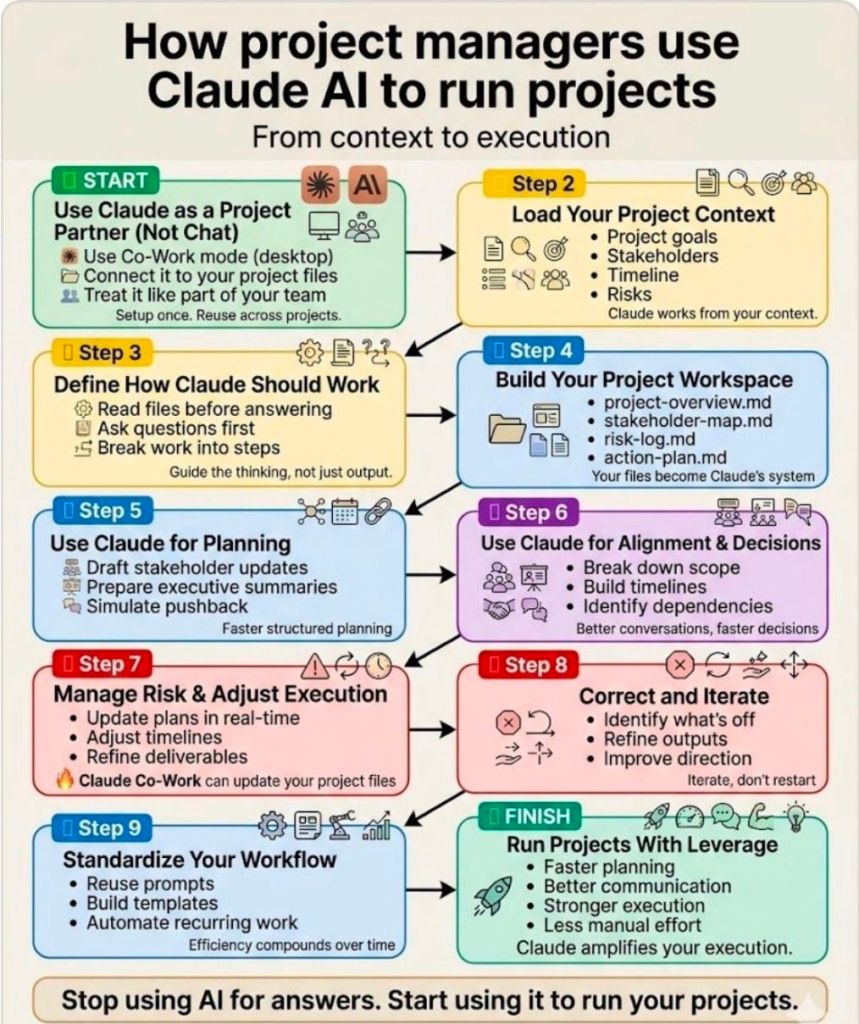
Claude is a family of large language models (LLMs) developed by Anthropic, a company founded in 2021 by former OpenAI executives Daniela and Dario Amodei with a core focus on AI safety and “Constitutional AI”. Known for its high-quality writing, advanced reasoning, massive context windows, and “Artifacts” interface, Claude has rapidly evolved from a safe conversational chatbot into an agentic tool capable of coding, computer use, and complex data analysis.
Overview of Claude AI
- Constitutional AI (CAI): Anthropic trains Claude using a set of principles (“constitution”) rather than relying only on human feedback. This makes Claude generally more cautious, more likely to refuse harmful requests, and transparent in its reasoning.
- Model Family (Haiku, Sonnet, Opus): Claude models are released in three tiers:
- Haiku: Fastest and most cost-effective.
- Sonnet: Balanced for speed and intelligence (general-purpose).
- Opus: Most intelligent, designed for complex tasks.
- Key Features:
- Context Window: Early adoption of long-context, moving from 100k to 200k tokens (roughly 500 pages of text).
- Artifacts: A dedicated UI window that displays rendered code, websites, and documents in real-time.
- Computer Use: A specialized capability allowing Claude 3.5 Sonnet to control a computer’s desktop environment—moving the cursor, clicking, and typing.
- Claude Code: Agentic coding tool introduced in 2025/2026 for automated software engineering.
Historic Timeline by Era and Year
Era 1: Foundation and Early Models (2021–2022)
- 2021: Anthropic is founded by Dario and Daniela Amodei, focusing on AI safety and “Constitutional AI”.
- Late 2022: Initial versions of Claude are released to select research partners for safety testing.
Era 2: Public Launch and Rapid Scaling (2023)
- March 2023: Claude 1 and Claude Instant are released for testing.
- July 2023: Claude 2 is released to the general public, featuring improvements in reasoning and coding.
- November 2023: Claude 2.1 is launched, doubling the context window to 200,000 tokens.
Era 3: The Claude 3 Family and Agentic AI (2024)
- March 2024: Claude 3 Family (Haiku, Sonnet, Opus) is launched, showcasing near-human intelligence, advanced vision capabilities, and high-speed processing.
- June 2024: Claude 3.5 Sonnet is released, outperforming the larger 3 Opus model and introducing the Artifacts feature for UI rendering.
- October 2024: Claude 3.5 Haiku and an upgraded 3.5 Sonnet are released. Anthropic launches the “computer use” public beta, allowing the AI to interact with software and browsers.
Era 4: Claude 4 and Agentic Workflows (2025–2026)
- February 2025: Claude Code is introduced as an agentic tool for developers.
- May 2025: Claude 4 Family (Opus 4 & Sonnet 4) is launched, featuring improved multi-modal reasoning and deep context processing.
- August 2025: Opus 4.1 is released with tighter safety controls for abusive conversations.
- November 2025: Opus 4.5 is released, focusing on enhanced coding and workplace tasks, alongside “Infinite Chats”.
- February 2026: Claude Opus 4.6 and Sonnet 4.6 are released, adding native “Agent Team” collaboration and 1M-token context.
- April 2026: Claude Mythos Preview is announced, designed for high-level cybersecurity vulnerability detection.
Key Differentiators
As of early 2026, Claude is considered a market leader in agentic AI development, particularly through its “Computer Use” feature, which allows it to act as an Autonomous agent rather than just a chatbot. While competitors like OpenAI focus on multimodal LLMs, Anthropic’s Claude continues to differentiate by prioritizing safety, long-context understanding, and specialized agentic coding tools.
Claude AI Overview and Detailed Historic Timeline by Era and Year
 PROject Templates