

BASE24 is the world’s most widely used payment processing platform, developed by ACI Worldwide. Originally designed for ATM networks, it evolved into a comprehensive system for acquiring, authenticating, and routing card-based and digital transactions across various channels. It is known for its high-performance, fault-tolerant architecture, processing nearly 50% of the world’s electronic transactions at its peak.
Comprehensive Timeline by Era
Era 1: Foundations & The Rise of BASE24 Classic (1975–1990s)
This era focused on high-availability software for the emerging automated banking industry, specifically for Tandem NonStop servers.
- 1975: ACI founded in Omaha, Nebraska, to develop software for the new “NonStop” server computers used by banks and stock exchanges.
- 1981: Secured its first international client, an Australian bank, marking the start of global expansion.
- 1982: Launch of BASE24, the first global product designed for 24-hour system operations, originally focused on ATM networks.
- 1986: Rapid growth led to 131 customers across 14 different countries.
Era 2: Expansion & Public Transition (1995–2000s)
The platform expanded into Point of Sale (POS) and branch systems while the company underwent major structural changes.
- 1995: The company went public on NASDAQ as Transaction Systems Architects (TSA).
- 1997: Officially adopted the name ACI Worldwide.
- Early 2000s: Introduction of BASE24-es (later renamed BASE24-eps), a next-generation platform using C++ and object-based architecture to replace the legacy monolithic design.
Era 3: Modernisation & The “eps” Shift (2005–2015)
ACI shifted focus toward BASE24-eps, a more flexible, open-architecture version designed for multi-channel transaction processing.
- 2005: ACI launches BASE24-eps, featuring a modular engine capable of processing approximately 2,000 transactions per second (TPS) with extremely low latency.
- 2007: TSA officially rebranded all operations under the ACI Worldwide, Inc. (ACIW) name.
- 2008: Announced that BASE24 Classic would begin maturing in 2011, urging customers to migrate to the eps platform for better integration with modern systems like IBM System z.
- 2011–2012: Release of BASE24-eps 11.1, adding support for DB2 on IBM System p, enhanced EMV acquiring, and tools for easier migration from legacy BASE24.
Era 4: Cloud & Universal Payments (2015–Present)
The platform moved toward cloud-native capabilities and broader ecosystem integration.
- 2015: ACI celebrated its 40th anniversary, continuing to power electronic payments for over 6,000 organisations worldwide.
- 2018: Introduction of UP BASE24-eps on Linux in the Cloud, demonstrating significantly reduced Total Cost of Ownership (TCO) through public and private cloud deployment.
- Present: BASE24 remains a core pillar of ACI’s portfolio, supporting traditional card, ATM, mobile commerce, and internet banking transactions.
BASE24-eps by ACI Worldwide timeline by era and year
BASE24-eps is a modular, high-availability payment processing engine developed by ACI Worldwide. It evolved from the original “BASE24 Classic” to provide a more flexible, open-system architecture for acquiring, authenticating, routing, and authorizing electronic transactions.
Base24-eps Overview
- Architecture: Unlike the TAL-based Classic version, BASE24-eps uses an object-oriented design written primarily in C++ and Java.
- Key Features:
- Multi-Channel Support: Manages transactions from ATMs, POS terminals, mobile, and ecommerce.
- Scripting Engine: Uses a powerful scripting language for rapid customization of business logic without code recompilation.
- Platform Independence: Runs on multiple operating systems including IBM z/OS, HP NonStop, Sun Solaris, and Linux in the cloud.
Detailed Timeline
The Foundation Era (1970s – 1990s)
- 1975: ACI is founded in Omaha, Nebraska, initially developing software for NonStop server computers.
- Late 1970s: Development of the original BASE24 (now known as “Classic”), focused on high-uptime ATM processing.
- 1981: First international customer (an Australian bank) signs on, starting the global expansion of BASE24.
Transition & Development Era (2000 – 2005)
- Early 2000s: ACI begins developing the “next generation” platform, initially called BASE24-es (extended systems), which later becomes BASE24-eps (enterprise payment system).
- 2003 – 2004: The product begins migrating to open architectures, moving away from platform-specific languages.
Mainstream Adoption Era (2006 – 2013)
- 2007: ACI highlights BASE24-eps as its strategic future platform in investor overviews.
- 2008: ACI announces the maturation of BASE24 Classic (ending standard maintenance in 2011), urging customers to migrate to BASE24-eps.
- 2009: IBM Redbooks releases technical guides for BASE24-eps 08.2 on z/OS, solidifying its place in enterprise banking.
- 2013: Release of BASE24-eps 2.0, introducing the “customer component” and enhanced service-enabling wrappers.
Modernization & Cloud Era (2014 – Present)
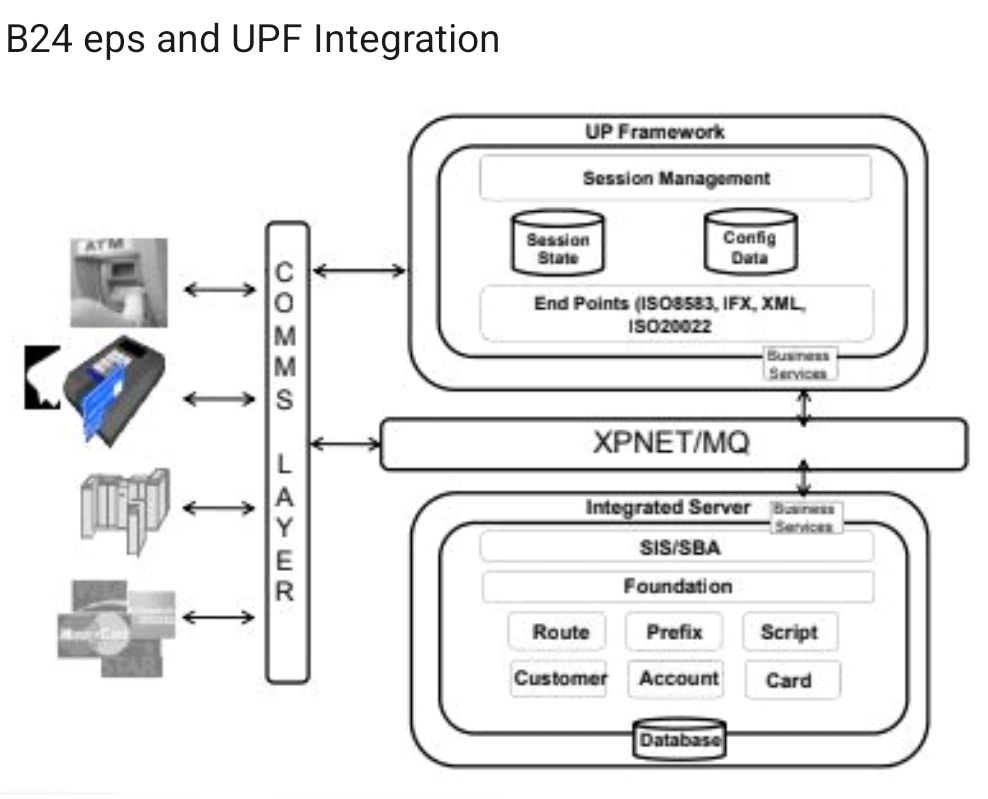
- 2015: ACI celebrates its 40th anniversary, positioning BASE24-eps as the backbone of its “Universal Payments” (UP) strategy.
- 2018: Introduction of BASE24-eps on Linux in public and private clouds, reducing total cost of ownership for financial institutions.
- 2024 – 2025: ACI continues to release updates (e.g., Version 3.0.x) with advanced extract and reporting features, real-time fraud prevention integration, and support for IBM’s latest z17/Telum II hardware.
 PROject Templates