

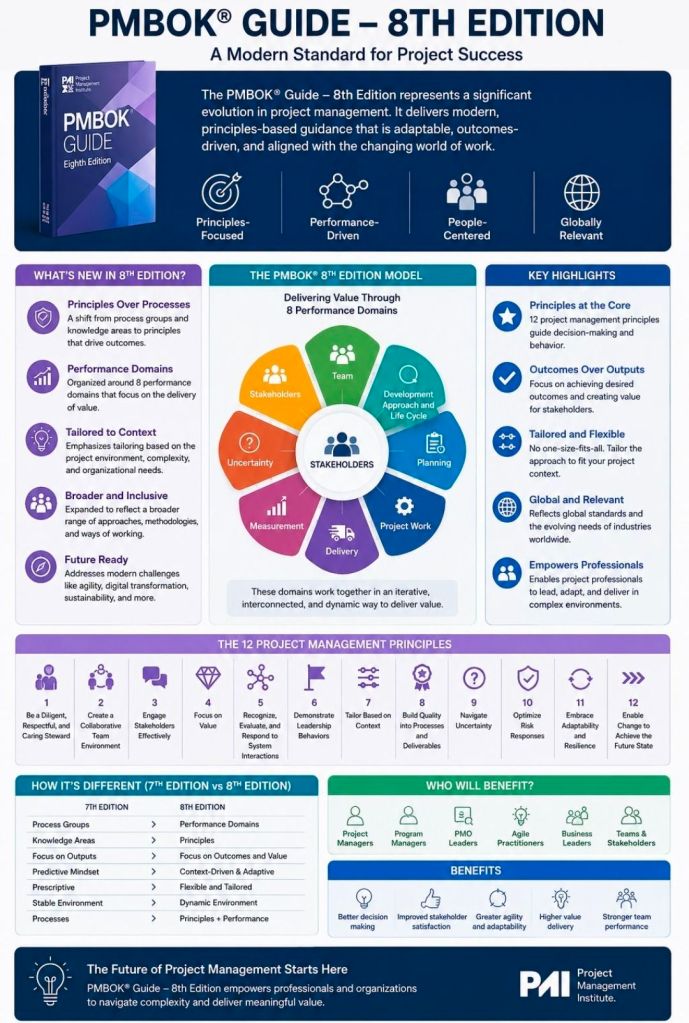
The PMBOK Guide 8th Edition is an integrated, value-driven framework that bridges the high-level principles of the 7th edition with the practical, process-oriented structure of older editions. It reintroduces 40 non-prescriptive processes alongside six core principles and seven performance domains.
📚 The Structure: Two Books in One
Similar to its predecessors, the printed volume of the 8th Edition includes two integrated publications:
- The Standard for Project Management: An official ANSI standard that focuses on strategic alignment, value delivery systems, and global applicability.
- A Guide to the Project Management Body of Knowledge (PMBOK Guide): The practical handbook containing the processes, tools, techniques, and tailoring considerations.
🟢 The 6 Core Principles
The 8th Edition streamlines the 12 principles from the 7th edition into six actionable pillars designed to guide professional behavior and mindset:
- Adopt a Holistic View: Think in terms of systems and understand how a project integrates with organizational strategy.
- Focus on Value: Direct efforts toward long-term outcomes and net-positive benefits rather than just output production.
- Build Accountable Leadership: Cultivate a culture of transparency, clear responsibilities, and high-performance teamwork.
- Embed Quality: Ensure quality processes and continuous improvement are woven into every phase of the work.
- Integrate Sustainability: Consider the long-term environmental, social, and economic impacts of project delivery.
- Build Empowered Teams: Foster environments where team members are supported, trusted, and empowered to solve problems.
🔵 The 7 Performance Domains
These represent key areas of practice, serving as the technical “what” of your project:
- Governance: Setting the rules, decision frameworks, and oversight mechanisms.
- Scope: Defining boundaries, deliverables, and requirements.
- Schedule: Managing timeframes, milestones, and critical paths.
- Finance: Budgeting, forecasting, and cost management.
- Stakeholders: Managing expectations, engagement, and communications.
- Resources: Allocating people, equipment, and physical/material assets.
- Risks: Identifying, analyzing, and mitigating uncertainties.
🟠 The 40 Evolved Processes & Focus Areas
A highly praised update in the 8th edition is the return of process guidance. To offer structured “how-to” guidance without becoming rigid, the processes are grouped into five Focus Areas (replacing the traditional Process Groups):
- Initiating
- Planning
- Executing
- Monitoring & Controlling
- Closing
Across these five focus areas, there are 40 non-prescriptive processes that detail the typical inputs, tools, techniques, and outputs (ITTOs). The guide includes explicit tailoring advice on how to adapt these processes for predictive, hybrid, and agile environments.
💡 Key Modern Additions
Reflecting over 48,000 global practitioner data points, the 8th Edition expands coverage into modern project environments:
- Artificial Intelligence (AI): Guidance on using AI and data analytics in project management.
- Project Management Offices (PMOs): Expanded focus on PMO structures and strategic value alignment.
- Procurement & Contracting: Modernized contracting types, dispute resolution, and vendor management.
📝 PMP Exam Note
If you are planning to take the PMP exam, make sure to check the official PMI PMP Certification Overview for the most up-to-date Exam Content Outline (ECO). The exam relies heavily on the ECO, and the 8th Edition guide serves as foundational reference material.


