

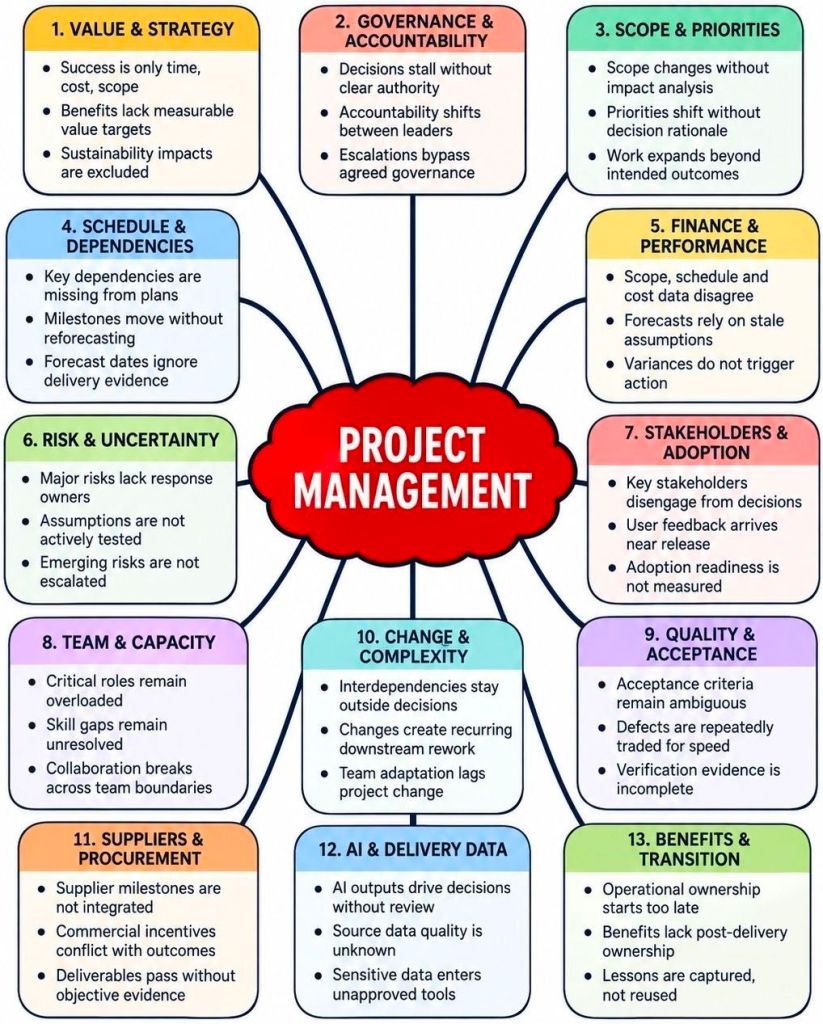
Key red flags in project management serve as early warning signs that a project is veering off course, helping teams intervene before minor issues escalate into total project failure.
Experienced project managers look past superficial status updates to spot subtle breakdowns in communication, planning, and execution.
The most common project management red flags are grouped by their operational area below:
📋 Scope and Strategy
- Continuous Scope Creep: Requirements keep expanding without corresponding adjustments to the project budget, timeline, or resource allocation.
- Misalignment with Strategy: The project outputs focus entirely on immediate tactical tasks but no longer deliver the overarching strategic value or outcomes the business actually needs.
- Superficial Project Plan: Key details, task dependencies, or success metrics are absent, making it difficult for team members to know what steps to take next.
⏱️ Timeline and Tracking
- Slipping Timelines with Vague Excuses: Milestones are consistently missed or delayed, accompanied by repetitive, hollow reassurances that the team will “catch up later”.
- Always-Green Status Reports: The project status dashboard shows a perfect “Green” light week after week, yet actual deliverables are lagging or shifting behind the scenes.
- Lack of a Baseline Schedule: Work is actively progressing in the field or in development, but the team still hasn’t officially approved or aligned on a baseline schedule to measure progress against.
👥 Team and Resources
- Key Person Risk: Critical technical or institutional knowledge is held entirely by one individual, making the entire project fragile if they leave or step away.
- Resource Misallocation: Shared resources or team members are over-allocated across multiple projects, leading to immediate bottlenecks and unmanaged dependencies.
- PM-as-Glue Syndrome: The project is only moving forward because the project manager is manually holding everything together through sheer willpower, rather than relying on an established system.
💬 Communication and Culture
- Sudden Drop in Engagement: Stakeholders stop replying to messages promptly, meeting attendance drops off significantly, or team collaboration noticeably slows down.
- Decision Paralysis: Leadership or key decision-makers repeatedly delay approvals or shift their minds, leaving the execution team completely stalled.
- False Alignment: Team members nod their heads and agree in meetings but silently push back or reverse decisions once the session is over.

