Data Security Standard)
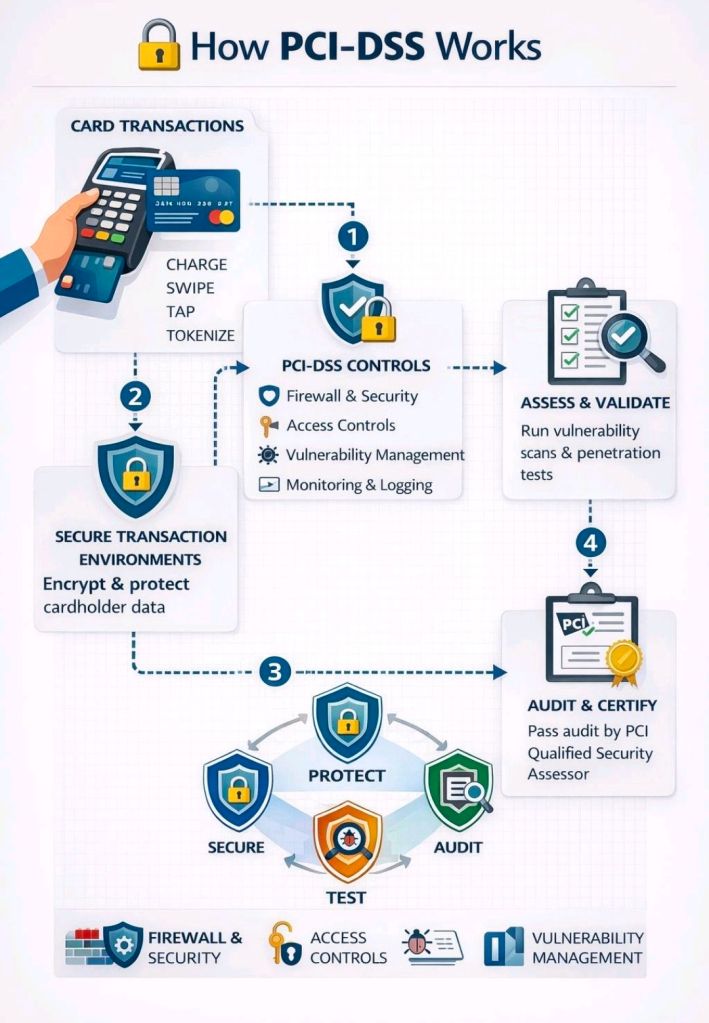
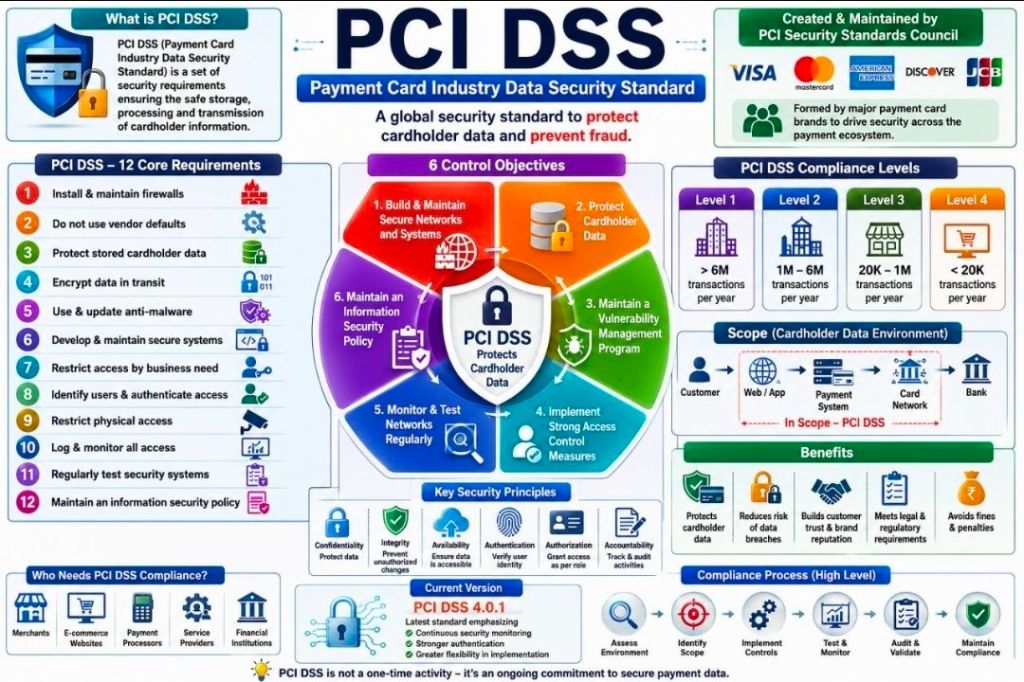
PCI DSS (Payment Card Industry Data Security Standard) is a globally recognized set of security guidelines designed to ensure businesses that accept, process, store, or transmit credit card information maintain a secure environment to protect cardholder data.
Who Needs It
If your business takes payments online, over the phone, or in-store, PCI DSS applies to you. It is mandatory for all merchants, financial institutions, and service providers handling card data, regardless of the company’s size or transaction volume.
The 12 Core Requirements
The standard consists of 12 fundamental requirements organized into 6 main control objectives:
- Network Security: Install and maintain network security controls (e.g., firewalls) to protect cardholder data.
- Secure Defaults: Never use vendor-supplied defaults for system passwords and other security parameters.
- Protect Stored Data: Safeguard stored account data via encryption, hashing, or truncation.
- Encrypt Transmissions: Strongly encrypt cardholder data across open, public networks.
- Malware Protection: Protect all systems and networks against malicious software.
- Maintain Secure Systems: Regularly update software, apply security patches, and develop secure systems.
- Restrict Access: Restrict system and cardholder data access on a strict “need to know” basis.
- Authenticate Users: Identify users and authenticate access to system components.
- Restrict Physical Access: Control and restrict physical access to cardholder data and hardware.
- Log and Monitor: Log and continuously monitor all access to network resources and cardholder data.
- Regular Testing: Regularly test security systems and network processes for vulnerabilities.
- Information Security: Maintain formal policies that address information security for all personnel.
Why Compliance Matters
Achieving compliance—often demonstrated through a Self-Assessment Questionnaire (SAQ) or a Report on Compliance (RoC)—protects your customers and your business from data breaches. Non-compliance can result in devastating penalties, forensic investigation costs, loss of merchant processing privileges, and heavy brand damage.
For more specific details, requirements, and self-assessment tools tailored to your business, refer to the official PCI Security Standards Council website.