

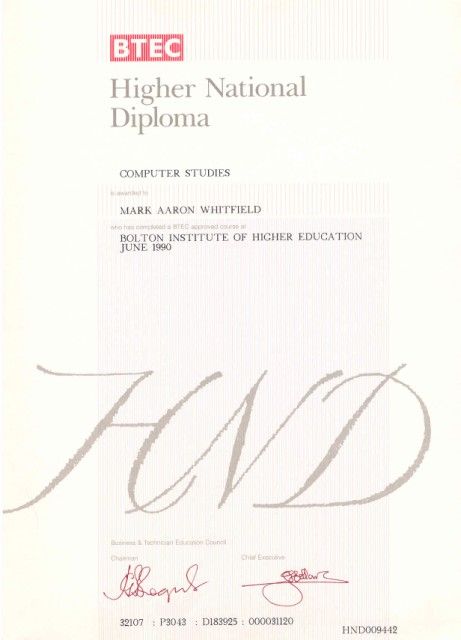
The Higher National Diploma (HND) in Computer Studies at the Bolton Institute of Higher Education (BIHE)—now the University of Greater Manchester—is a two-year, Level 5 vocational qualification designed to provide practical, industry-specific skills.
BIHE / University of Greater Manchester Evolution
The institution has undergone several name changes and status upgrades that affected the delivery of the HND:
- 1982: BIHE was formed through the merger of Bolton Institute of Technology and Bolton College of Education (Technical).
- 1992: The Institute was granted the power to award taught degrees.
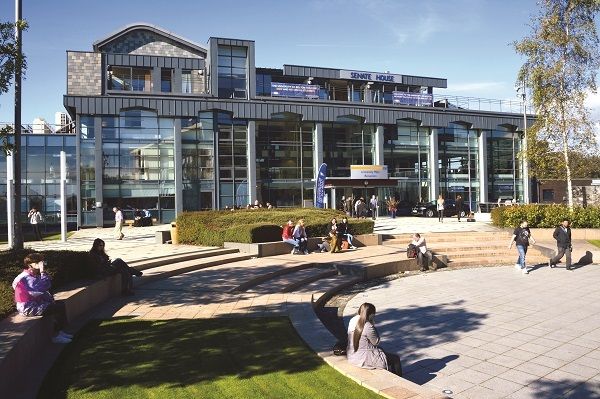
- 2004/2005: BIHE achieved full university status, becoming the University of Bolton.
- 2024: The university rebranded as the University of Greater Manchester.

HND Computer Studies: Detailed Timeline
The course traditionally follows a two-year full-time or three-year part-time structure.
Year 1: Foundations (HE4 Level)
The first year focuses on establishing core technical and business knowledge. In many versions of the Bolton curriculum, Year 1 is common across several computing programmes to allow for flexible progression.
- Core Modules:
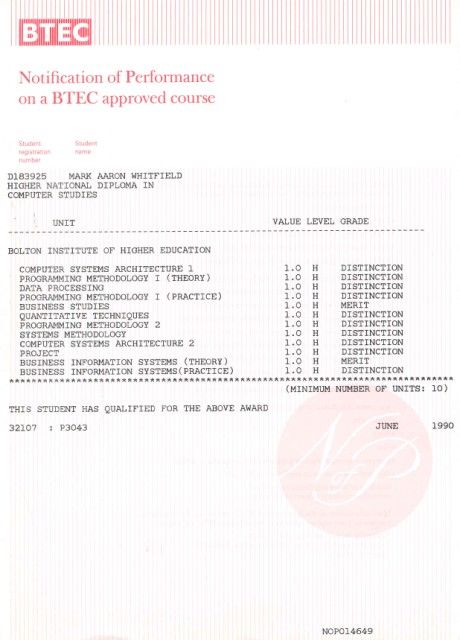
- Introduction to Programming: Developing fundamental coding logic.
- Computer Platforms & Systems Architecture: Understanding the hardware and software environments.
- Information Systems & Databases: The basics of data management.
- Website Production & Networking Fundamentals: Introduction to web technologies and connectivity.
- Quantitative Techniques & Business Studies: Integrating mathematical and commercial contexts.
Year 2: Specialisation (HE5 Level)
The second year shifts toward advanced application, systems analysis, and professional practice.
- Advanced Modules:
- Systems Analysis & Design: Producing system requirements and user interface specifications.
- Programming Methodology: Moving into more complex application development.
- Business Information Systems: Exploring how IT supports organizational requirements.
- Database Design: Implementing industry-standard database packages.
- Final Year Project: A major 20-credit core project where students investigate a specific field and apply their cumulative skills to a real-world scenario.
Progression and Modern Standards
- Academic Standing: Completion of the HND is equivalent to the first two years of a Bachelor’s degree (Level 5).
- Degree Top-Up: Successful HND graduates can typically proceed directly into the final year (Level 6) of the BSc (Hons) Computer Science or BSc (Hons) Computing at Bolton.
- Modern HTQs: Current versions of the course, such as the HND Computing for England (HTQ), now integrate modern fields like Artificial Intelligence, Cloud Computing, and VR technologies.

 PROject Templates