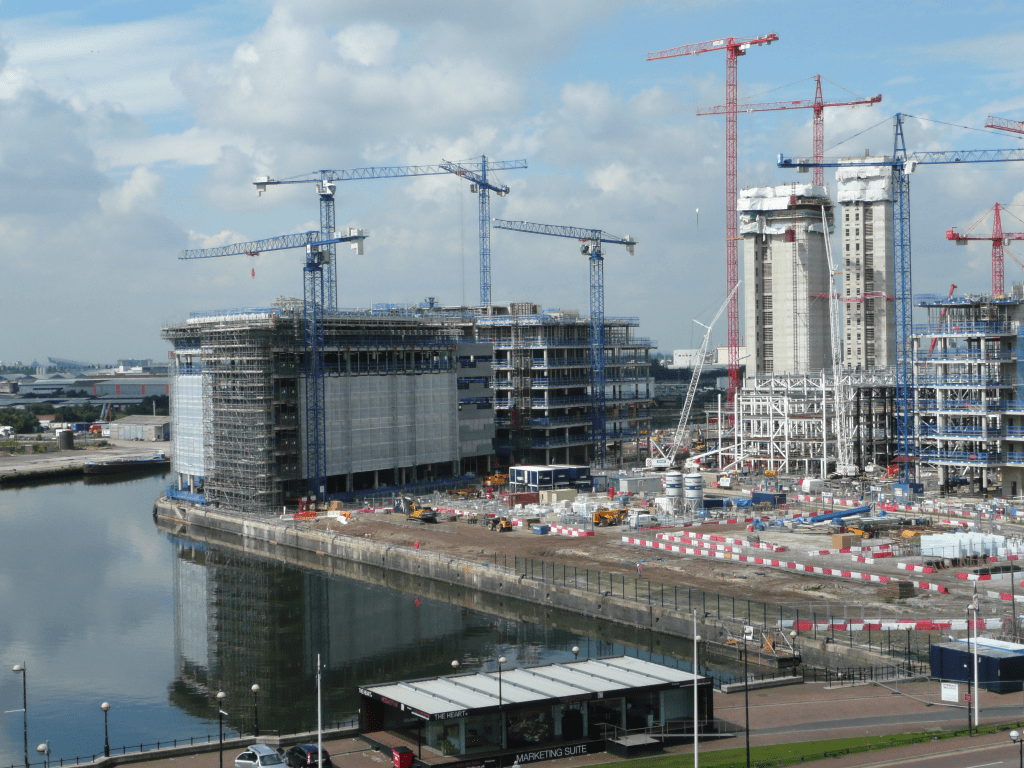
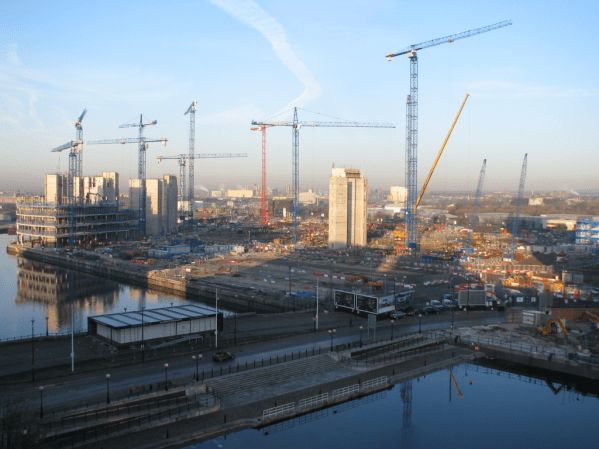
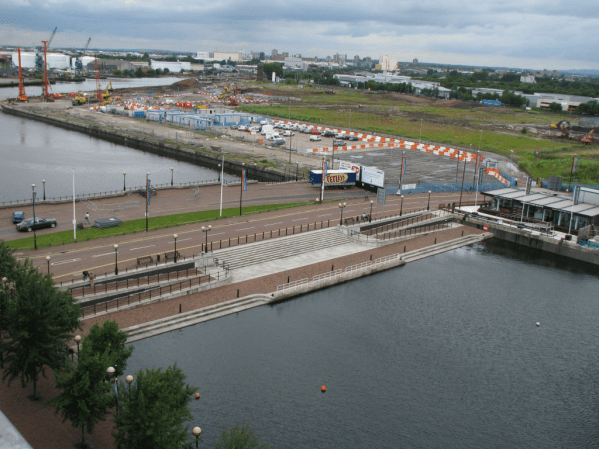
Mark Whitfield is a photographer who has documented the development of MediaCityUK in Salford Quays through an extensive “Photographic Build Timeline Journal”. His collection includes over 15,000 images that capture the site’s transformation from a derelict dockland into a global media hub.
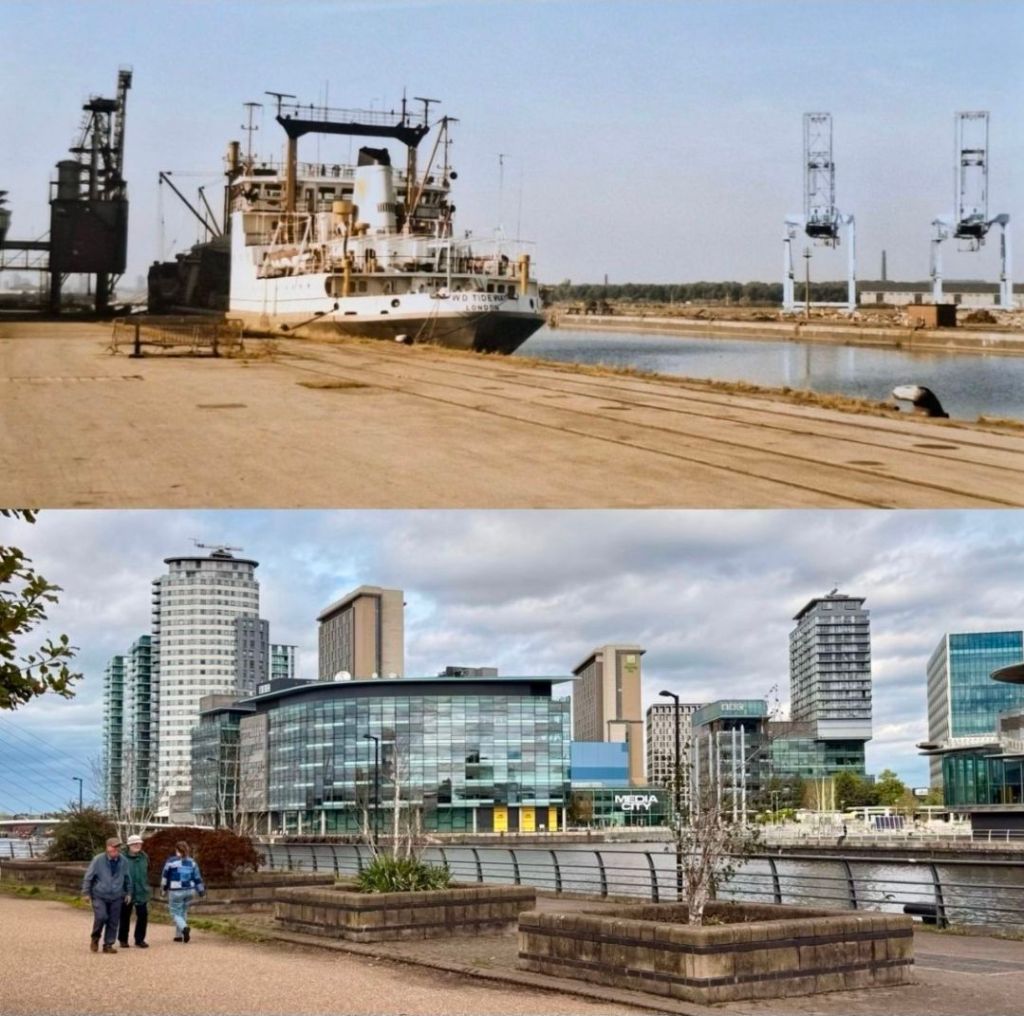
Mark Whitfield: Photography Overview
- Project Focus: Whitfield began documenting the rise of MediaCityUK in May 2007, specifically focusing on the construction of the BBC’s new northern home.
- Visual Documentation: His work is described as a unique photo timeline that charts the incredible structural changes at the site over several years.
- Background: Beyond his photography, Whitfield has a background in IT project management and has worked in Salford Quays for over 15 years.
- Galleries: Much of his work is hosted on his personal website, mark-whitfield.com, and he has shared specific milestones on platforms like Flickr and Instagram.
Historical Timeline of MediaCityUK
The following timeline integrates key development milestones with Whitfield’s photographic journey:
- 2004–2006: Pre-Construction Phase
- The BBC signals its intention to move jobs to Manchester (2004).
- Salford Quays is officially chosen as the site for the new development (June 2006).
- 2007: Construction Begins
- May 18, 2007: Mark Whitfield captures his first timeline photo, marking the start of the build.
- The first “spade in the ground” occurs as Peel Group and Bovis Lend Lease begin work.
- The Pie Factory, a refurbished bakery, opens as the first working studio complex.
- 2008–2009: Structural Growth
- Whitfield continues extensive documentation; photos from April 2008 and February 2009 capture the rising concrete frames of the main buildings.
- The high-rise 2,116-space multi-storey car park is completed (August 2009).
- 2010: Infrastructure Milestones
- The MediaCityUK Metrolink station opens (September 20), connecting the site to the wider Manchester tram network.
- First trial show is recorded in Studio HQ2 (November), featuring a simulated power failure and evacuation.
- Initial infrastructure is completed by December.
- 2011: Operational Launch
- January 2011: Dock10 studios become operational.
- February 2011: The first program, Don’t Scare the Hare, is filmed at MediaCityUK.
- May 2011: BBC staff begin moving into three dedicated buildings: Bridge House, Dock House, and Quay House.
- October 2011: The University of Salford opens its new media academy at the site.
- 2012–2014: Full Integration
- April 2012: The Queen and Duke of Edinburgh officially open MediaCityUK.
- March 2013: ITV completes its move to the site.
- January 2014: Coronation Street records its first episode at the new production facility on Trafford Wharf.
- 2015–2021: Expansion & Sustainability
- 2016: Completion of “Tomorrow,” the final building in Phase One.
- 2020: The Pie Factory closes and is demolished to make way for Phase Two.
- 2021: MediaCityUK buildings become the first in the UK to achieve net-zero carbon status.