BASIC programming language timeline history by year

BASIC (Beginner’s All-purpose Symbolic Instruction Code) was designed to make computing accessible to non-scientists, evolving from a simple teaching tool into the foundational language of the personal computer revolution. 

The Academic Era (1964–1974)

  • 1964: Invention at Dartmouth. John Kemeny and Thomas Kurtz created BASIC at Dartmouth College to allow students in non-technical fields to use computers.
  • 1964: First Execution. The first BASIC program ran on 1 May 1964, on a GE-225 mainframe.
  • Philosophy of Simplicity. It featured an intuitive, English-like syntax and was originally a “compile-and-run” language rather than a slow interpreter.
  • Time-Sharing. BASIC was designed for the Dartmouth Time-Sharing System (DTSS), allowing multiple users to program simultaneously from different terminals. 

The Home Computer Revolution (1975–1980s) 

  • 1975: Altair BASIC. Bill Gates and Paul Allen developed a BASIC interpreter for the MITS Altair 8800, which became Microsoft’s first product.
  • The “De Facto” Standard. By the late 1970s, BASIC was pre-installed in the ROM of almost every major home computer, including the Apple II, Commodore PET, and TRS-80.
  • Interpreted vs. Compiled. To save memory (often limited to 4KB), these versions were typically “interpreted,” meaning the computer translated code line-by-line during execution.
  • Hobbyist Culture. Magazines and books published “type-in” programs, allowing millions of users to learn coding by manually entering BASIC code. 

The Professionalization & Decline (Mid-1980s–1990)

  • Structured Evolution. Microsoft released QuickBASIC (1985), which introduced structured syntax (removing the need for line numbers) and a compiler for faster performance.
  • Rise of C and Pascal. Professional developers began shifting toward more powerful languages like C and Pascal as hardware became capable of supporting them.
  • Shift to Applications. As pre-written commercial software became common, the average user stopped writing their own programs in BASIC. 

The Visual & Enterprise Era (1991–Present)

  • 1991: Visual Basic (VB). Microsoft combined BASIC with a graphical user interface (GUI) designer, allowing developers to “drag and drop” buttons and forms.
  • Dominance in Business. By 1998, an estimated two-thirds of Windows business applications were built using Visual Basic 6.0.
  • 2002: Visual Basic .NET. Microsoft transitioned the language to the .NET framework, turning it into a fully object-oriented language.
  • Modern Status. While C# has surpassed it in popularity, VB.NET remains a stable, maintained language used heavily for maintaining legacy systems and Office automation. 

BASIC programming language timeline history by year

Sinclair ZX81 Home Computer timeline history

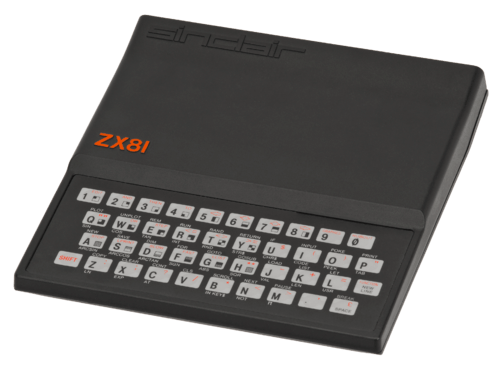
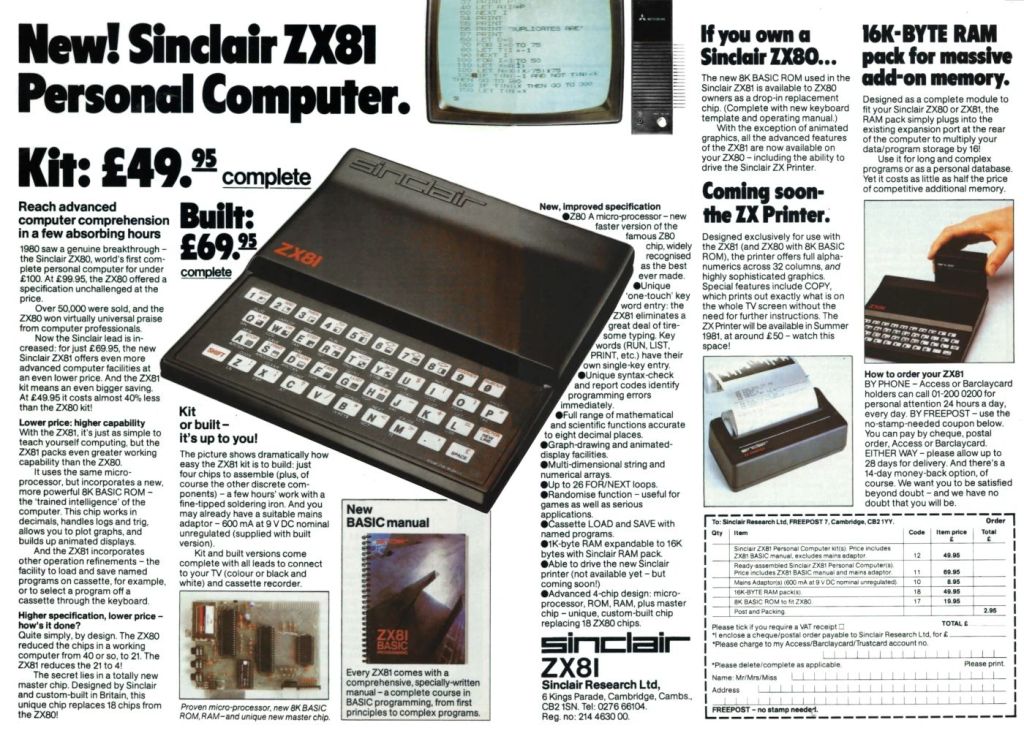
The Sinclair ZX81 was a seminal moment in home computing, launched in March 1981 as the successor to the ZX80. It was designed by Sinclair Research to be a low-cost entry point into computing, famously costing less than £70 (or £50 as a self-assembly kit). 

ZX81 Home Computer

Development & Launch (1980–1981) 

  • Autumn 1980: Most of the ZX81’s software was completed, with the remainder of the year spent writing the manual and finalizing hardware.
  • 5 March 1981: Official UK launch at an introductory price of £49.95 for the kit and £69.95 for the pre-assembled machine.
  • October 1981: Launched in the United States at $149.95 assembled and $99.95 in kit form.
  • November 1981: The ZX Printer was released for £49.95, expanding the system’s capabilities. 
ZX81 Home Computer article

Market Success & Expansion (1982)

  • January 1982: Over 300,000 units had been sold via mail order. American sales reached 15,000 units per month.
  • February 1982: Production reached 40,000 units per month to keep up with massive global demand.
  • July 1982Timex Sinclair 1000 launched in the US as a licensed version of the ZX81, featuring 2KB of RAM (double the original’s 1KB).
  • 1982 Peripheral Boom: Numerous third-party upgrades were released, including the Memopak 64K RAM expansion and various replacement “real” keyboards to solve the frustration of the original membrane design. 

The Shift to Spectrum & Decline (1982–1986) 

  • 23 April 1982: Sinclair launched the ZX Spectrum, the colour-capable successor that would eventually overshadow the ZX81.
  • 1983: Total production of the ZX81 surpassed 1.5 million units worldwide.
  • 1984: The ZX81 was officially discontinued as Sinclair focused on the Spectrum and the ill-fated Sinclair QL.
  • 7 April 1986: Following financial difficulties, Sinclair Research’s computer assets were sold to Amstrad for £5 million.

Sinclair ZX81 Home Computer timeline history

BBC Micro Home Computer and the Computer Project (CLP) timeline

The timeline of the BBC Micro and the Computer Project (CLP) represents a pivotal era in British computing, moving from early industrial machines to a generation-defining home computer

Pre-Launch & The Need for Literacy (1974–1980)

  • 1974: Ceefax launches as the world’s first teletext service, introducing interactive TV concepts.
  • 1978: Acorn Computers is founded in Cambridge; the BBC initiates its Computer Project to address the UK’s lack of digital preparedness.
  • 1979: A BBC report warns that the silicon chip will radically change the workplace, prompting the need for a national awareness campaign.
  • 1980: After the “New Brain” computer project fails to meet requirements, the BBC searches for a British manufacturer to build a custom machine. 
BBC Micro Home Computer

The Golden Era: The BBC Micro (1981–1985) 

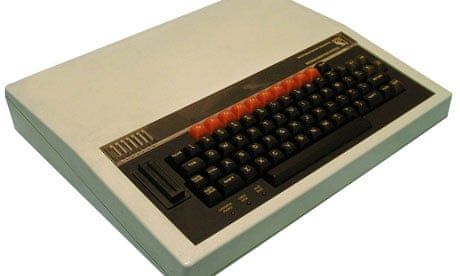
  • 1981: Acorn wins the contract in March with its “Proton” prototype. The BBC Micro Model A (£299) and Model B (£399) are officially launched in December.
  • 1982: The BBC Computer Literacy Project (CLP) formally launches with the TV series The Computer Programme. Over 500,000 machines are sold this year as the “Beeb” enters most UK schools.
  • 1983: The Acorn Electron is launched in August as a budget-friendly home version of the BBC Micro. New series Making the Most of the Micro begins.
  • 1984: High-speed expansion continues; 1,000 dealers operate in the US, and production reaches thousands of units per month in India and Mexico.
  • 1985: The BBC Micro achieves its goal: at least one machine is present in every British school. 

Expansion & The Move to 16-Bit (1986–1990s)

  • 1986: Launch of the Domesday Project, a massive digital snapshot of Britain stored on Laservision discs and accessed via BBC Micros.
  • 1987: The Acorn Archimedes is launched, introducing the revolutionary RISC architecture (the precursor to modern ARM chips).
  • 1989: The official CLP project concludes after nearly a decade of programming and hardware releases. The domain bbc.co.uk is registered.
  • 1997: The BBC website is established, transitioning the corporation’s digital focus from hardware to the internet. 

The Modern Legacy (2016–Present)

  • 2016: The BBC micro:bit is released—a pocket-sized, programmable computer distributed free to one million Year 7 students to continue the legacy of coding literacy.
  • 2018: The BBC Computer Literacy Project Archive is made public, allowing users to watch old programmes and run original 8-bit software in modern browsers.

BBC Micro Home Computer and the Computer Project (CLP) timeline

Home Computers, ZX Spectrum versus Commodore 64

The Commodore 64 (C64) and ZX Spectrum were the primary rivals of the 8-bit home computing era, particularly in the UK, where they defined a decade of “playground wars”. While the ZX Spectrum launched in April 1982 as an affordable entry into computing, the Commodore 64 followed in August 1982 with superior custom hardware for sound and graphics. 

1982: The Birth of the Icons 

  • January: Commodore unveils the Commodore 64 at CES in Las Vegas.
  • 23 April: Sinclair Research launches the Sinclair ZX Spectrum 16K/48K in the UK. It is marketed for its 15-colour palette and affordable price compared to the BBC Micro.
  • August: The Commodore 64 begins volume production and goes on sale in the US for $595.
  • Late 1982: Sinclair introduces the Issue 2 motherboard for the Spectrum to fix manufacturing defects. 

1983: Expansion and Price Wars

  • January: Commodore introduces the Commodore SX-64, the first commercial full-color portable computer.
  • July: The Timex Sinclair 2068, an enhanced US version of the Spectrum, is launched.
  • August: Spectrum sales in Britain and Europe exceed 500,000 units.
  • December: The millionth ZX Spectrum is manufactured.
  • Market Shift: Commodore begins aggressive price-cutting to underbid competitors, leading to the “Home Computer Price War”. 

1984–1985: New Iterations and Corporate Shifts

  • January 1984: Sinclair announces the Sinclair QL, intended as a professional successor to the Spectrum.
  • October 1984: Sinclair releases the Sinclair ZX Spectrum+, featuring a new QL-style case and a plastic injection-moulded keyboard to replace the original rubber keys.
  • January 1985: Commodore releases the Commodore 128, a successor that includes a dedicated “64 mode” for 100% compatibility with C64 software.
  • September 1985: The Sinclair ZX Spectrum 128 (codenamed “Derby”) is launched in Spain, featuring 128KB RAM and a three-channel sound chip. 

1986–1987: The Amstrad Era and Redesigns 

  • January 1986: The ZX Spectrum 128 is officially released in the UK.
  • 7 April 1986: Amstrad acquires the Sinclair brand and computer range for £5 million after Sinclair Research faces financial difficulties.
  • Late 1986: Commodore introduces the Commodore 64C, a redesigned model with a sleeker, light-coloured case matching the C128’s aesthetic.
  • Late 1986: Amstrad releases the ZX Spectrum +2, featuring a grey case and a built-in cassette recorder.
  • 1987: Amstrad launches the ZX Spectrum +3, which includes a built-in 3-inch floppy disk drive. 

1988–1994: The Twilight Years 

  • 1988: Amstrad releases the ZX Spectrum +2A, updating the +2 with the internal circuitry of the +3.
  • 1990: Commodore attempts to move into the console market with the Commodore 64 Games System (C64GS), a keyboard-less version of the C64 that ultimately fails commercially.
  • 1992: Amstrad officially discontinues all ZX Spectrum models after approximately 5 million total units sold.
  • April 1994: The Commodore 64 is officially discontinued as Commodore International enters bankruptcy. It remains the best-selling single computer model of all time with 12.5 to 17 million units sold. 

Home Computers, ZX Spectrum versus Commodore 64

Commodore 64 Home Computer Timeline Overview

The Commodore 64 (C64) is the best-selling single computer model of all time, with an estimated 12.5 to 30 million units sold during its 12-year production run

Commodore 64 Annual Timeline

  • 1981: Development Phase
    • January: Engineers at MOS Technology begin a project to design state-of-the-art video and sound chips (VIC-II and SID) for the next generation of games consoles.
    • November: The cutting-edge chips are completed, and Commodore decides to use them for a new home computer to succeed the VIC-20.
  • 1982: Launch and Early Expansion
    • January: The Commodore 64 is officially introduced at the Consumer Electronics Show (CES) with a starting price of $595.
    • August: The C64 begins shipping in the USA, featuring its iconic “breadbox” design.
    • Other Models: The Japan-only MAX Machine (a console version) and the Educator 64 (aimed at schools) are also released.
  • 1983: Price Wars and Portables
    • January: Commodore introduces the SX-64, the world’s first portable computer with a colour screen, retailing for approximately $1,600.
    • June: To dominate the market, Commodore slashes the C64 price to $300, triggering an intense price war that drives competitors like Texas Instruments out of the market.
  • 1984: Leadership Changes
    • January: Founder Jack Tramiel resigns from Commodore after a disagreement with chairman Irving Gould.
    • Expansion: The Commodore 16 and Plus/4 are introduced as low-cost alternatives, though they lack full C64 compatibility.
  • 1985: Peak Performance
    • C128 Release: Commodore launches the Commodore 128, which includes a dedicated C64 compatibility mode to leverage the existing library.
    • Gaming Dominance: The C64 becomes the primary platform for video games, with thousands of titles released by developers like System 3 and MicroProse.
  • 1986: The Redesign
    • May: The Commodore 64C is released, featuring a sleeker, flatter cream-coloured case similar to the Amiga 500.
    • Milestones: To celebrate selling one million units in Germany, a limited “Gold Edition” is presented at the BMW museum.
  • 1987–1989: Late-Era Variants
    • 1987: The C64 Aldi is sold through German supermarkets as a budget model.
    • 1988: The C64G is introduced, returning to the original breadbox shape but using the modern 64C internal hardware.
  • 1990: Consolidation and Consoles
    • C64 Games System (GS): Commodore attempts to enter the console market by releasing the C64 GS (a keyboardless C64), but it fails to compete with the rising 16-bit systems like the Sega Genesis.
  • 1994: The End of an Era
    • April: Despite reaching a final sales total of roughly 17–22 million units, Commodore International files for bankruptcy and the C64 is officially discontinued. 

Commodore 64 Home Computer Timeline Overview

Sinclair ZX Spectrum Timeline History

The ZX Spectrum timeline spans from its revolutionary launch in 1982 to its final official production in 1992, followed by a vibrant modern era of community-driven hardware. 

The Sinclair Era (1982–1986) 

  • 23 April 1982Sinclair Research launches the ZX Spectrum at the Earls Court Computer Show. It features 16 KB (£125) or 48 KB (£175) of RAM, a Z80A CPU, and the iconic rubber “chiclet” keyboard.
  • 1983: Timex Sinclair 2068 is released in the US as a modified version of the Spectrum.
  • October 1984: The ZX Spectrum+ is released for £179. It features a new injection-moulded keyboard similar to the Sinclair QL and a dedicated reset button, but remains electronically identical to the 48K model.
  • September 1985: The ZX Spectrum 128 (“The Toast Rack”) is unveiled at the SIMO trade show in Spain. It introduces 128 KB of RAM, an AY-3-8912 sound chip, and MIDI compatibility.
  • January 1986: The ZX Spectrum 128 officially goes on sale in the UK for £179.95. 

The Amstrad Era (1986–1992) 

  • 7 April 1986Amstrad plc acquires the “Sinclair” brand and all Spectrum assets from Sinclair Research for £5 million.
  • 1986: The ZX Spectrum +2 is released. It features a grey case with a spring-loaded keyboard and a built-in “Datacorder” cassette player.
  • 1987: The ZX Spectrum +3 launches with a built-in 3-inch floppy disk drive, replacing the tape deck. It is the only official Spectrum capable of running the CP/M operating system.
  • 1988–1989: Amstrad releases the +2A+2B, and +3B models, which use unified circuit boards and transition to black cases.
  • 1992: Official production of all ZX Spectrum models is discontinued. 

The Modern Revival (2017–Present)

  • 2017: The ZX Spectrum Next Kickstarter campaign successfully funds a new, officially licensed hardware evolution.
  • February 2020: The first batch of ZX Spectrum Next machines is delivered to backers.
  • November 2023: The ZX Touch, a handheld emulation console, is released.
  • 22 November 2024Retro Games releases “The Spectrum”, a modern HDMI-compatible recreation with 48 built-in games.

ZX Spectrum Timeline History

Home Computer historical development timeline by era

The transition from massive, industrial room-sized mainframes to the “home computer” was driven by the invention of the microprocessor in the early 1970s

The Pre-Home Era (1971–1976) 

Before “home computers” existed as off-the-shelf products, they were sold as DIY kits for electronics hobbyists. 

  • 1971Intel releases the 4004, the first commercial single-chip microprocessor.
  • 1974: The MITS Altair 8800 is featured in Popular Electronics; it is widely considered the spark of the personal computer revolution.
  • 1976Apple Computer is founded. The Apple I goes on sale as a hand-soldered board for $666.66.
  • 1976: MOS Technology releases the KIM-1, the first single-board computer kit. 

The “1977 Trinity” & Early Adoption

In 1977, three computers were released that targeted ordinary consumers rather than just hobbyists. 

  • Apple II: Features colour graphics and eight expansion slots, becoming a standard for schools and early home users.
  • Commodore PET 2001: The first “all-in-one” home computer with a built-in monitor and tape drive.
  • TRS-80 Model I: Sold through Radio Shack stores, making computers accessible on the high street for $399. 

The 1980s Boom

This decade saw fierce competition between manufacturers and the rise of gaming and office productivity. 

  • 1980Sinclair ZX80 launches in the UK as a very low-cost entry point into computing.
  • 1981: The IBM PC is released, creating the “PC-compatible” standard that still dominates today.
  • 1981: The Commodore VIC-20 becomes the first computer to sell over one million units.
  • 1982: The Commodore 64 launches and eventually becomes the best-selling single computer model of all time.
  • 1984Apple launches the Macintosh, the first successful mass-market computer with a Graphical User Interface (GUI) and a mouse.
  • 1985: The Amiga 1000 and Atari ST bring advanced multimedia and multitasking to the home. 

Standardisation & The Modern Age (1990s–Present) 

The market shifted away from proprietary “home computers” toward standardized “PCs” and portable devices. 

  • 1990Microsoft Windows 3.0 is released, making GUI computing standard on IBM-compatible PCs.
  • 1995Windows 95 launches, moving the PC away from its MS-DOS roots and integrating internet support.
  • 1998: The Apple iMac revitalizes Apple’s consumer line with an integrated, colourful design and USB ports.
  • 2010: The Apple iPad introduces the “tablet” as a primary home computing device for many users.
  • 2012: The Raspberry Pi launches, bringing home computing back to its DIY and educational roots.

The history of the home computer evolved from large, room-sized mainframes into the diverse, interconnected devices used today. This timeline categorises the evolution by era and key annual milestones

The Pre-Home Era: Mainframes & Minicomputers (1940s–1960s) 

Before computers could fit in a home, they were massive machines used by governments and corporations. 

  • 1945ENIAC (Electronic Numerical Integrator and Computer) is completed as the first general-purpose electronic digital computer.
  • 1951UNIVAC I is delivered to the US Census Bureau, becoming the first commercial computer produced in the US.
  • 1960DEC PDP-1 is introduced, representing the first “minicomputer” that was smaller than its predecessors.
  • 1965: The DEC PDP-8 launches, becoming the first commercially successful minicomputer. 

The Hobbyist Era: The First Personal Computers (1970–1976) 

The invention of the microprocessor allowed computers to become small enough for individuals to own, though they often required manual assembly. 

  • 1971Intel 4004, the first single-chip microprocessor, is released.
  • 1974: The MITS Altair 8800 appears on the cover of Popular Electronics, sparking the hobbyist revolution.
  • 1976: The Apple I, a single-board computer kit designed by Steve Wozniak, is released.

The “1977 Trinity” & The Home Boom (1977–1983) 

This era saw the transition from kits to fully assembled, consumer-ready “home computers”. 

  • 1977: The “1977 Trinity” launches: the Apple II (with colour graphics), the Commodore PET, and the Tandy TRS-80.
  • 1980Sinclair ZX80 is released as one of the first low-cost home computers in the UK.
  • 1981: The IBM PC is released, setting the industry standard for hardware and software compatibility.
  • 1981: The Osborne 1 is released as the first commercially successful portable computer.
  • 1982: The Commodore 64 launches; it eventually becomes the best-selling single computer model of all time.
  • 1982: The ZX Spectrum is released, becoming a cultural icon in Europe. 

The Graphical User Interface (GUI) Era (1984–1994)

Computers moved away from text-based commands toward visual icons and mice. 

  • 1984: The Apple Macintosh launches, popularising the mouse and Graphical User Interface (GUI).
  • 1985: The Commodore Amiga 1000 and Atari ST launch, bringing advanced multimedia and multitasking capabilities.
  • 1990: Tim Berners-Lee creates the World Wide Web, fundamentally changing how home computers would be used.
  • 1994: PowerPC processors are introduced by Apple, significantly increasing processing speed. 

The Internet & Mobility Era (1995–Present)

Home computing shifted focus toward connectivity, portability, and eventually, the cloud. 

  • 1995Windows 95 is released, integrating internet support and making PCs user-friendly for the masses.
  • 1998: The Apple iMac launches, ditching the floppy drive and embracing USB.
  • 2000s: Laptops begin to outsell desktops as portable computing gains momentum.
  • 2010: The Apple iPad pioneers the modern tablet market, creating a new “casual computing” category.
  • 2012: The Raspberry Pi is released, re-engaging a new generation in hobbyist computer building.
  • 2020s: The rise of Cloud Computing and AI Integration (like the Apple M1 chip) shifts the focus from local storage to remote applications and machine learning.