

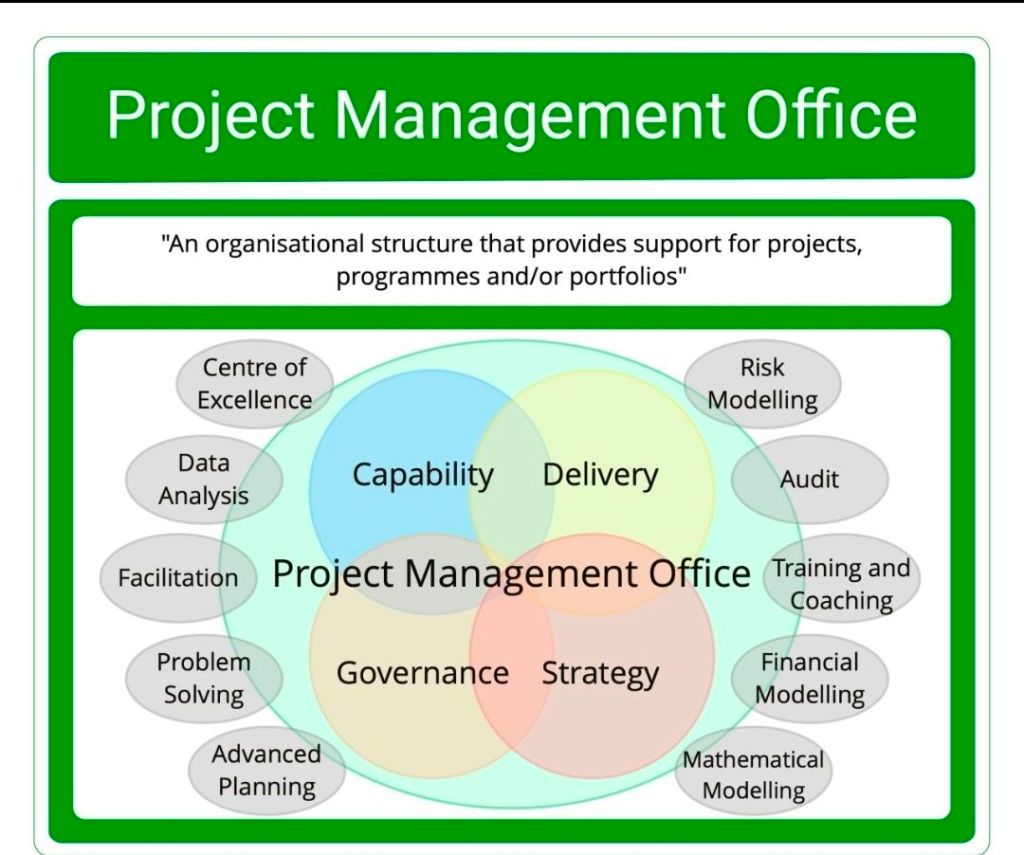
A Project Management Office (PMO) is a dedicated department or team within an organisation that defines, maintains, and standardises project management practices across the business. It serves as the central authority that ensures projects are executed efficiently, remain aligned with strategic business goals, and deliver maximum value.
Think of it as the regulatory and support hub for an organisation’s initiatives; while a project manager runs an individual project, the PMO creates the overall ecosystem in which all projects operate.
🔎 The 3 Main Types of PMOs (By Degree of Control)
Depending on the organization’s needs, a PMO typically falls into one of three structural categories:
- Supportive PMO: Acts as a consultative hub. It provides templates, best practices, and training but exercises very low control over the actual project execution.
- Controlling PMO: Enforces compliance and governance. It mandates that project teams adopt specific methodologies, templates, and frameworks, exercising a moderate level of control.
- Directive PMO: Takes direct ownership of the projects. The PMO provides the project managers themselves and maintains high control, ensuring strict execution according to organizational standards.
📊 Key Responsibilities of a PMO
A high-performing PMO bridges the gap between executive strategy and day-to-day project execution through several core functions:
- Governance and Compliance: Establishes approval workflows, audits project health, and ensures all teams comply with internal and external policies.
- Standardisation: Creates standardized rules, templates, and methodologies (such as Agile or Prince2) so that everyone speaks the same project language.
- Resource Management: Acts as a “traffic cop” to balance shared resources—like budget, tech tools, and personnel—across conflicting project schedules.
- Strategic Portfolio Management: Reviews and prioritizes proposed projects against company priorities to ensure the business is spending its money on the right initiatives.
- Performance Reporting: Tracks Key Performance Indicators (KPIs) and provides clean, objective data dashboards to stakeholders and C-suite executives.
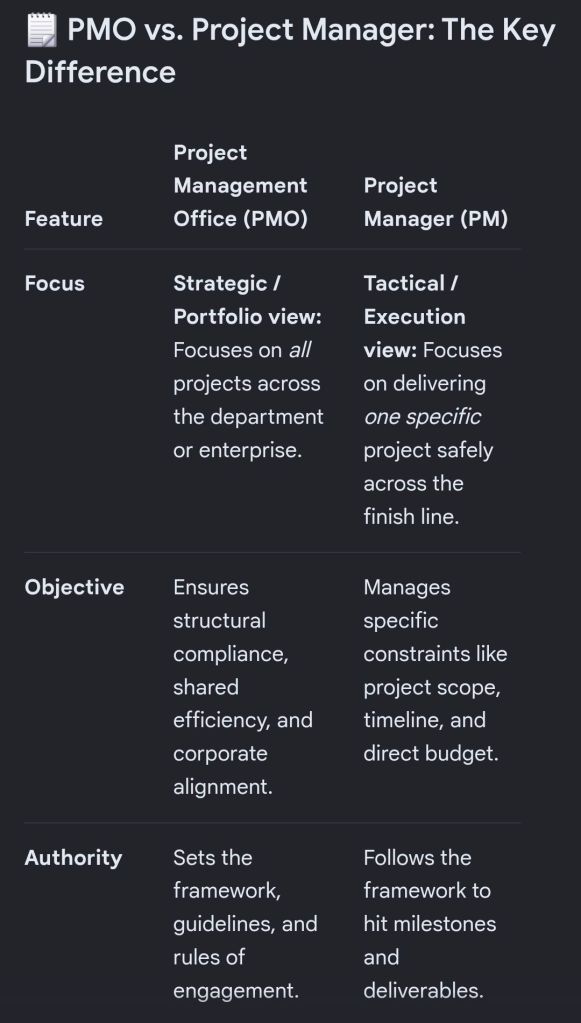
💡 Core Benefits of a PMO
Organisations with a mature PMO report significantly better project success rates. A PMO delivers value by reducing project financial waste via standard budgeting, speeding up execution timelines through repeatable templates, and preventing team burnout with proactive resource allocation. It also establishes a central “lessons learned” database so that the company does not repeat past mistakes on new ventures.


