

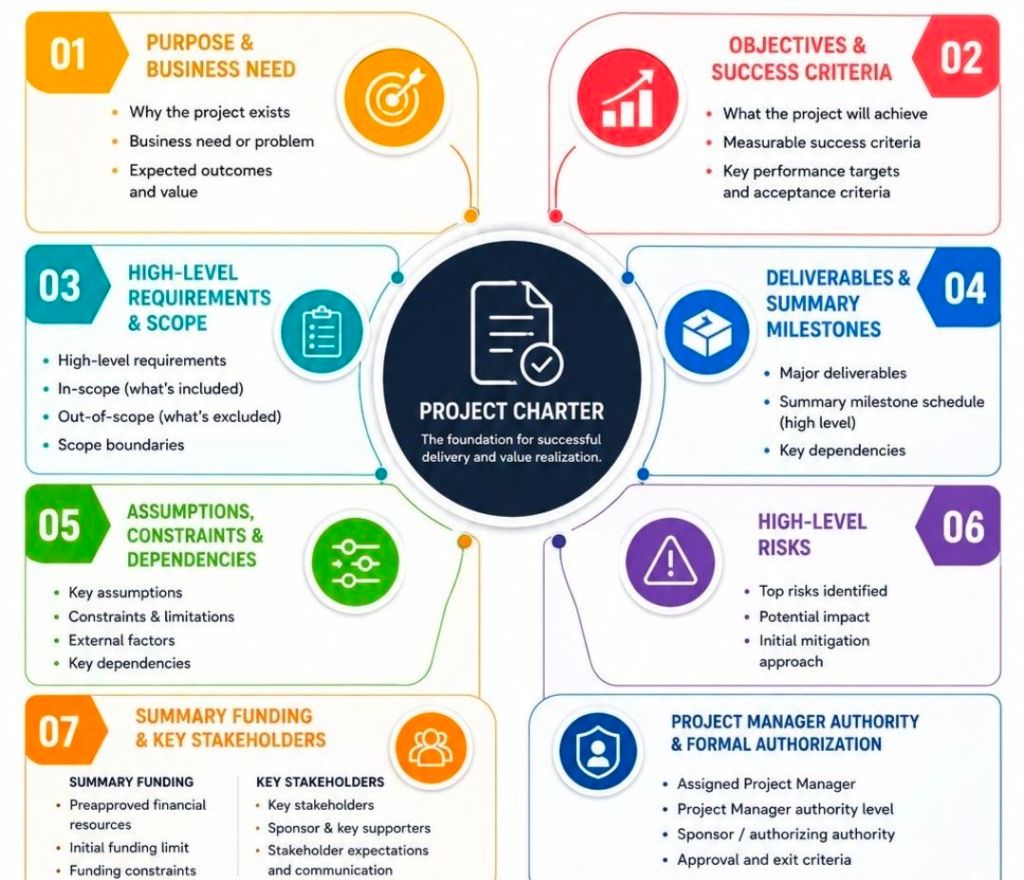
A project charter summary acts as a formal, high-level blueprint that officially authorizes a project, aligns stakeholders, and empowers the project manager. Because it is pitched to executive leaders, it condenses detailed planning into a concise one- to two-page summary containing crucial governance and directional information.
1. General Project Information
- Project Name: The official title reflecting the project’s purpose.
- Key Roles: Identification of the Project Sponsor, Project Manager, and core team members.
- Stakeholders: A list of key internal and external parties impacted.
2. Core Project Context
- Business Case: The strategic rationale explaining why the project exists.
- Problem Statement: A short description of the core issue being resolved.
- Objectives: Specific, measurable goals defining ultimate project success.
3. Execution Boundaries
- Project Scope: Explicitly defines what is included and excluded from the work.
- Key Deliverables: The tangible outputs or products to be produced.
- Success Criteria: The baseline metrics used to evaluate final delivery.
4. Constraints & Logistics
- Milestone Timeline: A high-level schedule detailing major phases and target deadlines.
- Budget Estimate: A preliminary breakdown of funding and financial resources.
- Risks & Assumptions: Anticipated roadblocks and presumed truths impacting planning.
5. Governance
- Authority Level: Explicit statement of what resources the project manager can allocate.
- Sign-off / Approvals: Signature blocks for executive sponsors to grant project liftoff.
The Purpose of a Project Charter
- Formal Authorization: It acts as the “official green light” to start the project and use company funds.
- Establish Authority: It delegates decision-making power and resources to the project manager, which helps manage and push back on stakeholder interference.
- Prevent Scope Creep: By setting boundaries in writing, it gives teams a touchstone to review against whenever new, unapproved tasks are requested mid-project.
- Stakeholder Alignment: It ensures that every party—from executive leadership to the hands-on team—shares the same understanding of what “done” looks like.
Project Charter vs. Project Plan
It is common to confuse the charter with the project plan, but they serve vastly different purposes at different stages of the project lifecycle:
- Project Charter: Created before planning. It is a high-level summary that answers the “what” and “why” to secure project authorization.
- Project Plan: Created after the charter is approved. It is a detailed blueprint that answers the “how”, including task-by-task execution, granular schedules, resource allocations, and communication cadences.


