PRINCE2 – PRojects IN Controlled Environments – Timeline

PRINCE2 (PRojects IN Controlled Environments) has evolved from a rigid, IT-specific framework into a globally recognised, flexible project management standard. 

Historical Evolution Timeline

  • 1975: PROMPT Origins – Simpact Systems Ltd developed PROMPT (Project Resource Organisation Management and Planning Techniques) to address IT project overruns.
  • 1989: The Birth of PRINCE – The UK’s Central Computer and Telecommunications Agency (CCTA) licensed PROMPT, renaming it PRINCE (originally “PROMPT II IN the CCTA Environment”).
  • 1996: PRINCE2 Launch – Developed with input from 150 European organisations, PRINCE2 was released as a generic, scalable framework suitable for any industry.
  • 2000–2013: Ownership Shifts – Ownership moved from the CCTA to the Office of Government Commerce (OGC) in 2000, then to AXELOS Ltd (a joint venture) in 2013.
  • 2009: Major “Refresh” – Introduced the seven core principles and made the method more customisable.
  • 2017: 6th Edition Update – Formerly known as the “2017 Update,” this version focused heavily on scalability and tailoring to specific project needs.
  • 2021–Present: PeopleCert Era – PeopleCert acquired AXELOS in 2021. In 2023, PRINCE2 7 was launched, introducing a greater emphasis on people management and sustainability. 

Comprehensive Project Timeline Breakdown

A standard PRINCE2 project follows a lifecycle defined by seven processes

  1. Pre-Project: Starting up a Project (SU)
    • Ensures the project is viable and worthwhile.
    • Key Output: Project Brief.
  2. Initiation: Initiating a Project (IP)
  3. High-Level Oversight: Directing a Project (DP)
    • An ongoing process where the Project Board provides guidance and makes key decisions without managing day-to-day tasks.
  4. Day-to-Day Management: Controlling a Stage (CS)
    • The Project Manager monitors work, manages risks, and reports progress for each individual stage.
  5. Technical Delivery: Managing Product Delivery (MP)
    • The Team Manager ensures products (deliverables) are created, tested, and handed over according to specifications.
  6. Transition: Managing a Stage Boundary (SB)
  7. Finalisation: Closing a Project (CP)
    • The formal decommissioning of the project, ensuring all products are accepted and lessons are documented. 

PRINCE2 – PRojects IN Controlled Environments

PRINCE2 (PRojects IN Controlled Environments) is a structured, process-based project management methodology

PRINCE2 (PRojects IN Controlled Environments) is a structured, process-based project management methodology used globally to manage projects of any size and complexity. It focuses on dividing projects into manageable stages, ensuring accountability, and maintaining a clear business justification from start to finish. 

Core Framework (PRINCE2 7)

The latest version, PRINCE2 7th Edition (2023), centers on five integrated elements: 

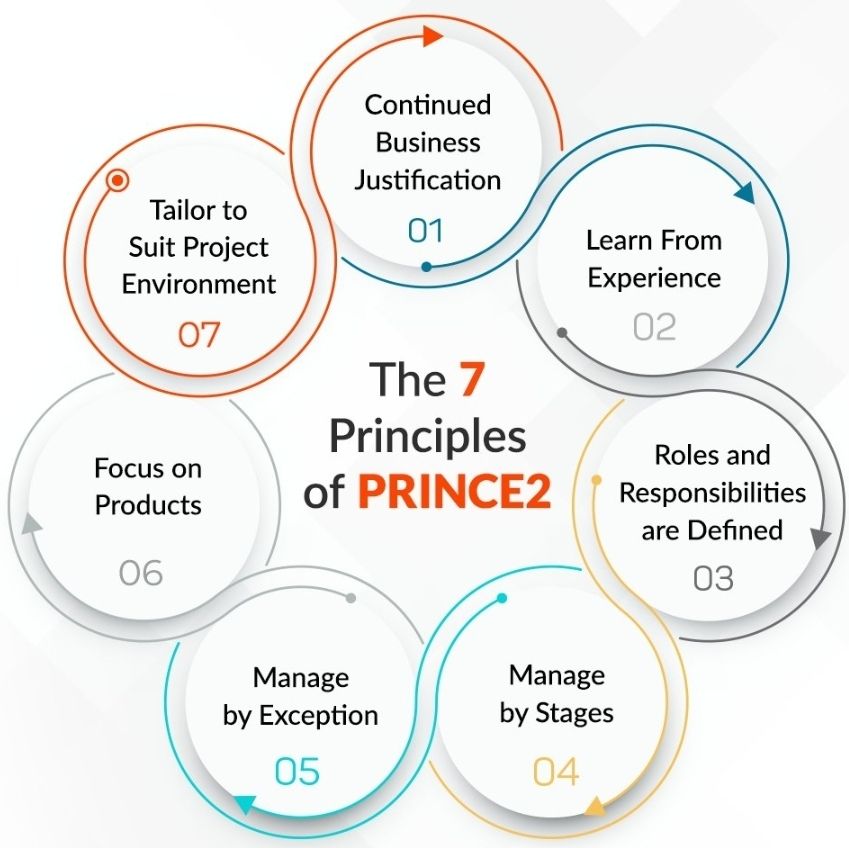
  • 7 Principles: The “guiding obligations” that must be followed for a project to be considered PRINCE2 (e.g., Continued Business JustificationLearn from Experience, and Manage by Exception).
  • 7 Practices: Essential aspects of management (formerly “Themes”) applied throughout the lifecycle: Business Case, Organizing, Plans, Quality, Risk, Issues, and Progress.
  • 7 Processes: A step-by-step guide from Starting up a Project to Closing a Project.
  • People: A major addition in Version 7, focusing on the human side of change and team dynamics.
  • Project Context: Emphasises the need to tailor the methodology to suit the specific project environment. 

Certification Levels:

Qualifications are typically sought through PeopleCert Accredited Training Organisations (ATOs)

  1. Foundation: Introduces basic concepts and terminology; no prerequisites required.
  2. Practitioner: Focuses on applying and tailoring the method to real-world scenarios. Requires a valid Foundation-level certificate or an equivalent (like PMP or CAPM).
  3. PRINCE2 Agile: A specialised version that blends the structure of PRINCE2 with agile delivery frameworks like Scrum and Kanban. 

Comparison and Value

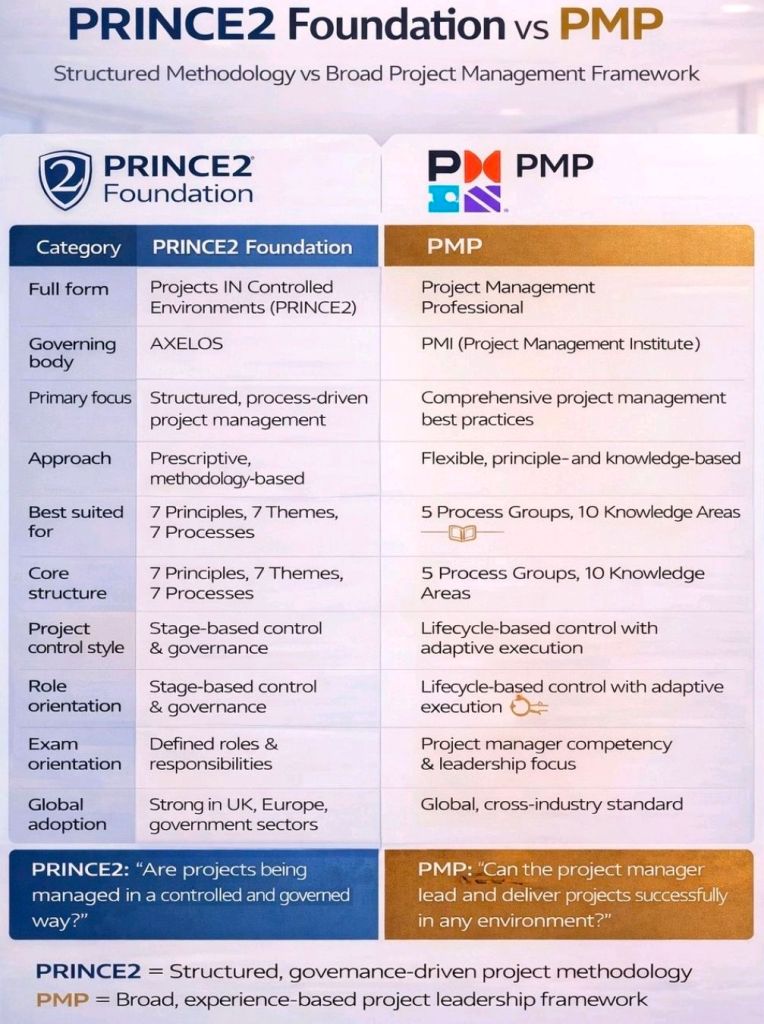
  • Geographic Dominance: PRINCE2 is the de facto standard in the UK public sector and is widely used across Europe and Australia. In contrast, the PMP (from PMI) is more prevalent in the USA and Canada.
  • Cost: In the UK, Foundation courses typically range from £549 to £1,000, while Practitioner courses cost between £599 and £1,100.
  • Renewal: All current PRINCE2 certifications must be renewed every three years

PRINCE2 (PRojects IN Controlled Environments) is a structured, process-based project management methodology.

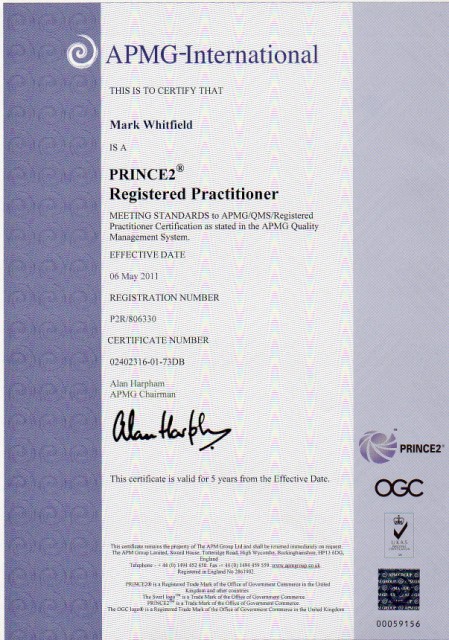
May 2011 – Registered PRINCE2 Practitioner with ILX

mark whitfield mark_whitfield_prince2_registered_practitioner
PRINCE2 (PRojects IN Controlled Environments) is a structured, process-based project management methodology

The 7 Principles of PRINCE2, Projects IN Controlled Environments

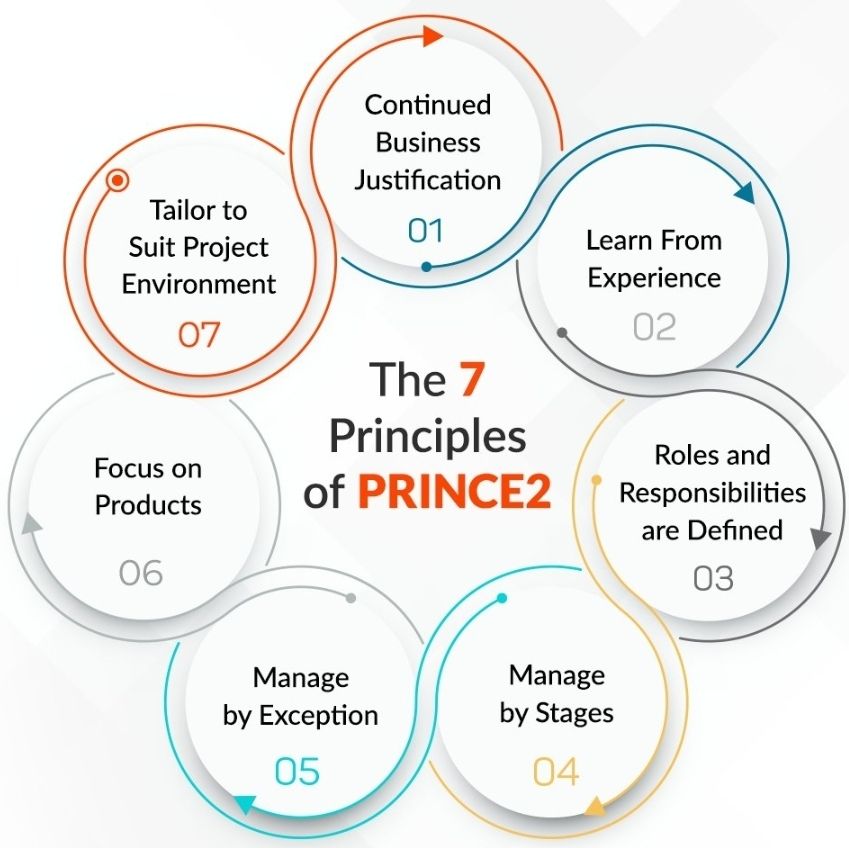
The 7 Principles of PRINCE2, Projects IN Controlled Environments

PRINCE2 Foundation vs PMP

Projects IN Controlled Environments PRINCE2 vs Project Management Professional PMP