TAL & PTAL Programming Language on Tandem HPE NonStop

Tandem TAL (Transaction Application Language) is a block-structured, procedural language designed in the mid-1970s for Tandem’s NonStop fault-tolerant operating systems, optimized for systems programming, high-reliability OLTP, and direct hardware interaction. It is heavily influenced by ALGOL and HP 3000 systems, allowing high-performance, message-based applications, and remains supported on modern HP Enterprise NonStop x86-64 platforms. 
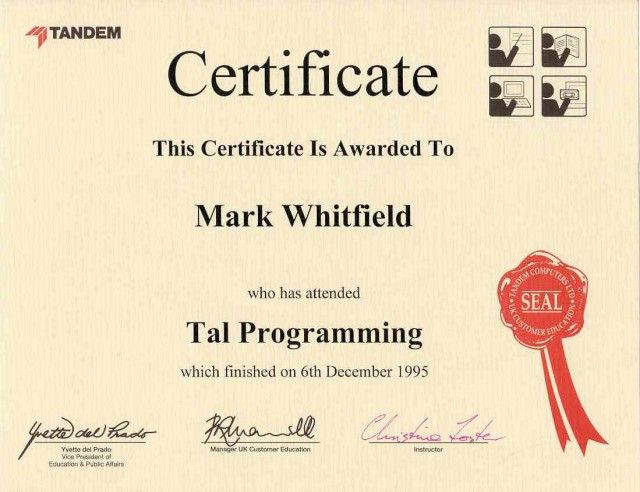
Tandem TAL Programming certificate back in 1995, Mark Whitfield

Overview of TAL Programming

  • Purpose: Developed to run on Tandem’s GUARDIAN operating system to build highly available, fault-tolerant transactional systems.
  • Characteristics: Procedural, block-structured, efficient (closer to assembly than C), and designed for speed and direct memory access, according to a NonStop Insider article.
  • Features: Strong support for data manipulation, process management, and message-based IPC (Inter-Process Communication) necessary for node-to-node replication, as described on the Wikipedia page on Tandem Computers.
  • Relation to TACL: While TAL is for creating compiled applications, TACL (Tandem Advanced Command Language) is the interpreter/macro language used for command procedures and system interaction, as explained in a Scribd document

Historical Timeline of TAL

  • 1975–1976 (Founding Era): TAL is created for the first Tandem/16 system shipped in 1976, heavily utilizing expertise from HP 3000 systems programming, according to a personal blog post.
  • Early 1980s (Expansion): TAL becomes the standard for ATM networks and banking systems, requiring high-reliability code, as seen in this blogger.com article.
  • 1985 (Evolution): TAL is used to build complex OLTP environments, distinguishing it from nascent PC markets as noted in archived Tandem press clippings.
  • 1990s (Native TAL): Introduction of “Native” TAL (T/TAL) to handle new architecture requirements and move from 16-bit to 32-bit environments, according to a TAL Programmer’s Guide document.
  • 1997 (Compaq Merger): Tandem is acquired by Compaq; TAL continues as the core systems language.
  • 2001 (HP Merger): Tandem (via Compaq) is acquired by HP, bringing TAL to the HP Integrity (Itanium) platform.
  • 2010s–Present (Modernization): TAL applications are ported to HP Enterprise NonStop x86-64, with support for running TAL programs on Intel processors and in virtualized instances, according to a NonStop Insider article. 

Present Day

  • TAL remains essential for maintaining legacy systems, but new applications often utilize C/C++ or Java on the modern NonStop platform, as noted in the Wikipedia page on Transaction Application Language.
  • TAL applications are still relevant due to the “single system image” and fault-tolerance features that define the current NonStop environment, according to the NonStop Insider article. 

PTAL Overview and Timeline

Tandem PTAL (Portable Transaction Application Language) is a block-structured, procedural systems programming language used on HPE NonStop (formerly Tandem) servers. It is the portable successor to the original TAL (Transaction Application Language), designed to allow high-level systems programming without an assembler while maintaining near-machine efficiency. 

Overview: TAL, PTAL, and epTAL

The language evolved to support different processor architectures over Tandem’s 50-year history: 

  • TAL (Original): Designed for the 16-bit CISC stack machine architecture (TNS). It has the syntax of ALGOL/Pascal but the low-level semantics of C.
  • PTAL (Portable): Introduced during the migration to MIPS RISC processors (TNS/R). It removed machine-specific constructs to allow code to be compiled into native RISC instructions.
  • epTAL (Extended): Developed for the migration to Intel Itanium processors (TNS/E). 

Historical Timeline by Year

Year Milestone

1974, Tandem Computers founded by James Treybig; initial design of the Tandem/16 hardware begins.

1976, TAL released. The Tandem/16 (NonStop I) ships with TAL as its only programming language.

1981, NonStop II introduced, adding 32-bit addressing support to TAL via an “extended data segment”.

1983, NonStop TXP launched; first major reimplementation of the instruction set architecture supported by TAL.

1986, NonStop VLX introduced with 32-bit data paths; NonStop SQL released, often managed via TAL-based systems.

1989, NonStop Cyclone released, the high-end mainframe competitor for the TAL environment.

1991, PTAL Development starts with the release of Cyclone/R, the first MIPS-based machine. TAL code is initially translated via an “Accelerator” tool before native PTAL compilers take over.

1993, Himalaya K-series released; native mode operating system (NSK) and native compilers (PTAL) become standard.

1997, Compaq acquires Tandem. Migration begins from MIPS to Alpha (later abandoned).

2002, HP merges with Compaq. Development focuses on the Itanium (TNS/E) architecture.

2005, epTAL introduced for the new Integrity NonStop i servers based on Intel Itanium microprocessors.

2014, x86 Migration. NonStop X (TNS/X) systems are released, transitioning the TAL/PTAL environment to Intel x86-64 processors.
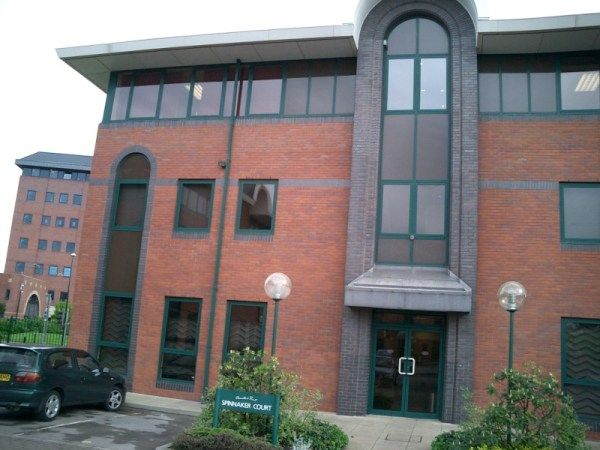
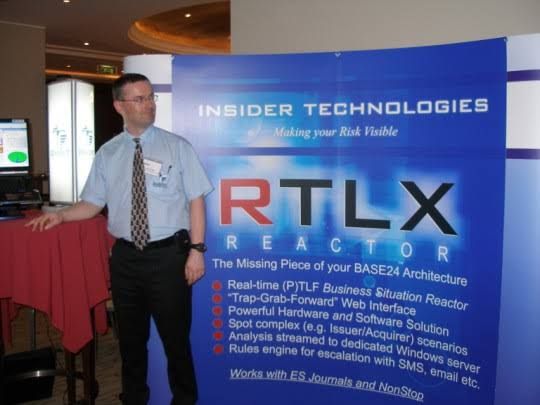
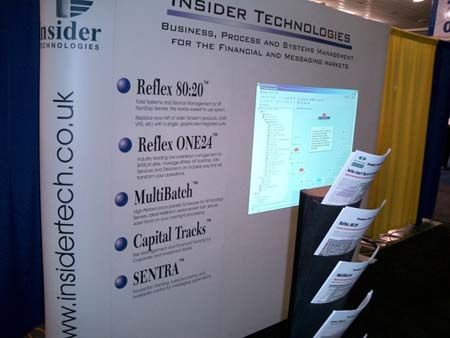
RTLX by Insider Technologies, Overview and Timeline by Year

Insider Technologies RTLX is a real-time monitoring and tracking solution designed to provide end-to-end visibility for high-volume electronic payments and transactional processes. It specifically ensures that every stage of a payment—from the initial card “tap” at a point-of-sale (POS) terminal to the final movement of funds from an account—is monitored to maintain operational continuity. 

RTLX Overview

  • Function: Real-time transaction and payment monitoring.
  • Platforms: Runs on HP NonStop, Windows, Linux, and Unix.
  • Core Value: Simplifies “Big Data” for IT operations by alerting teams to potential failures before they impact consumers (e.g., preventing ATM or online banking outages).
  • Key Use Case: Used by major financial institutions like the Bank of England and Royal Bank of Scotland for settlement and transaction security. 

RTLX Historical Timeline

The development of RTLX is closely tied to Insider Technologies’ growth as a specialist in mission-critical HP NonStop environments. 

EBUG Conference, Mark Whitfield – Product Manager

The Foundational Era (1989–2000)

  • 1989Insider Technologies Limited is founded in Manchester, UK, by IT industry veterans.
  • 1990s: The company establishes its “DNA” in the HP NonStop (Tandem) platform, developing core products like MultiBatch and Reflex.
  • 1995: Insider begins a period of rapid growth, providing technical support for critical UK financial infrastructure, including Euroclear (formerly CRESTCo), which settles 88% of UK equities. 

The Expansion Era (2001–2014)

  • 2002: Launch of the state-of-the-art Systems Training Platform, featuring 4x patented cloning technology for hyper-realistic simulations.
  • 2004–2013: Development of the Reflex suite (Reflex 80:20 and Reflex ONE24) and the introduction of Sentra and RTLX Reactor monitoring products.
  • 2014: Insider expands its product initiatives to include diagnostic and trending solutions for real-time electronic payments, solidifying the role of RTLX in global banking. 

The Acquisition & Integration Era (2015–Present)

  • 2015ETI-NET acquires Insider Technologies on 1 July, integrating its monitoring expertise with ETI-NET’s mainframe storage and backup solutions.
  • 2019: Insider celebrates its 30th year of operations, highlighting RTLX’s role in monitoring modern POS and “tap” payment systems.
  • 2023–Present: Insider becomes part of the PartnerOne group, a global family of mission-critical software companies, further scaling its threat detection and real-time monitoring capabilities. 

RTLX by Insider Technologies, Overview and Timeline by Year

Connect : HPE Nonstop Ecosystem – formerly NSK, Tandem, Himalaya

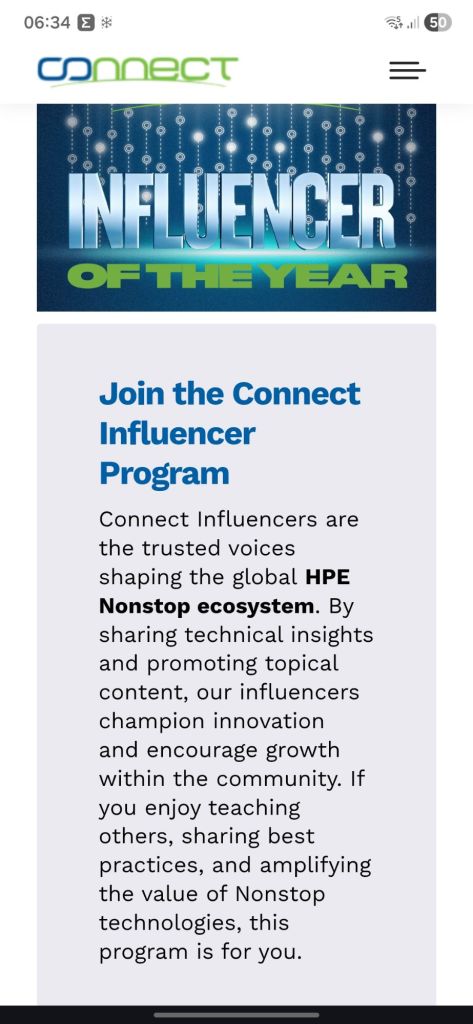
Connect’s Influencer of the Year Program

Connect : HPE Nonstop Ecosystem – formerly NSK, Tandem, Himalaya

Tandem Computers, NonStop Kernel (NSK), a Timeline of HP NonStop

Tandem Computers, NonStop Kernel (NSK), a timeline of the history and evolution of HP NonStop.

Note: some texts below AI generated for completeness.

Tandem’s NonStop computers, founded by Jimmy Treybig in 1974, were a revolutionary fault-tolerant system that sold its first server in 1976 to Citibank, achieving rapid growth through the 1980s before later becoming part of Compaq (1997), Hewlett-Packard (2003), and finally Hewlett Packard Enterprise (HPE). Key milestones include the 1983 introduction of the Transaction Monitoring Facility (TMF), which simplified development by handling fault tolerance at the system level, the introduction of the first NonStop X x86-based systems in 2014, and the phasing out of Itanium-based models by 2020. 

1970s

  • 1974: Tandem Computers Inc. is founded by Jimmy Treybig, with the goal of creating “NonStop” computers that don’t fail. 
  • 1975: The design of the first NonStop hardware, the Tandem/16, is completed. 
  • 1976: The first NonStop server ships to Citibank. The company experiences exponential growth. 

1980s

  • 1981: The NonStop II server is introduced, and Tandem joins the Fortune 500. 
  • 1983: The requirement for developers to code specifically for fault tolerance is removed with the introduction of the Transaction Monitoring Facility (TMF) and NonStop Tuxedo software. 
  • 1985: The first online-serviceable disk storage facilities, the V8 and XL8, are introduced. 
  • 1986: NonStop technology is used by the world’s 30 largest telecommunication companies and many top banks. 
  • 1988: Tandem acquires Ungermann-Bass, Inc. to enhance its networking capabilities. 
  • Late 1980s: A new line of NonStop systems, including the CLXCYCLONE, and Cyclone-R, is introduced, representing a significant redesign while maintaining fault-tolerant principles. 

1990s

  • 1990: Tandem reaches its peak revenue but begins a slow decline as the market shifts to faster, cheaper systems. 
  • 1991: Tandem announces the Tandem Image Processing System for digitized document management. 
  • 1997: Tandem is acquired by Compaq, becoming a server division within the company. 

2000s 

  • 2003: Hewlett-Packard (HP) acquires Compaq, and the NonStop line becomes part of HP.
  • 2005: The HP Integrity NonStop i (TNS/E) servers, based on Intel Itanium microprocessors, are introduced.

2010s

  • 2014: The first NonStop X (TNS/X) systems, built on Intel x86-64 processors, are launched. 
  • 2015: Following the split of Hewlett-Packard, the NonStop division becomes part of Hewlett Packard Enterprise (HPE). 

2020s 

  • 2020: Sales of Itanium-based NonStop systems end, marking a major shift to x86 architecture for the product line.

The Tandem NonStop history began in 1976 with Tandem Computers’ introduction of its fault-tolerant systems for critical transaction processing. After Tandem was acquired by Compaq in 1997, the NonStop line continued under Compaq, then Hewlett-Packard (HP) in 2003, and is now part of Hewlett Packard Enterprise (HPE) following the company’s 2015 split. Key developments include the 1983 introduction of the Transaction Monitoring Facility (TMF) and NonStop Tuxedo, the 2005 arrival of NonStop i servers based on Intel Itanium processors, and the 2014 launch of the NonStop X systems using Intel x86-64 processors. 

Also;

1970s

  • 1974: Tandem Computers is founded in Cupertino, California, by Jim Treybig. 
  • 1976: Tandem introduces its first NonStop fault-tolerant system. 
  • 1970s: Tandem’s architecture is designed for continuous availability and zero data loss, becoming the dominant manufacturer of fault-tolerant computer systems for ATM networks, banks, and stock exchanges. 

1980s

  • 1983: Tandem introduces the Transaction Monitoring Facility (TMF) and the Pathway transaction management software, removing the need for applications to be specifically coded for fault tolerance. 
  • 1986: Tandem launches NonStop SQL, the first fault-tolerant SQL database, which offers unique features for data integrity across nodes and can scale performance with additional nodes. 
  • 1989: A new version of NonStop SQL adds transactions that can be spread across multiple nodes, a groundbreaking feature for the time. 

1990s 

  • 1997: Compaq acquires Tandem Computers, with NonStop becoming a server division within Compaq.

2000s 

  • 2003: Hewlett-Packard (HP) acquires Compaq, integrating the NonStop line into its operations.
  • 2005: HP introduces the HP Integrity NonStop i servers (also known as TNS/E), which are based on Intel Itanium microprocessors.

2010s

  • 2014: HP launches the first NonStop X systems (TNS/X), which are built on Intel x86-64 processors. 
  • 2015: Following the split of Hewlett-Packard, the NonStop division becomes part of Hewlett Packard Enterprise (HPE). 

2020s

  • 2020: Sales of the Itanium-based NonStop systems end. 
  • 2025 (Present): HPE continues to operate the NonStop platform, a technology that still serves critical infrastructure requiring high availability and continuous operation. 

See also : https://www.company-histories.com/TANDEM-COMPUTERS-INC-Company-History.html