

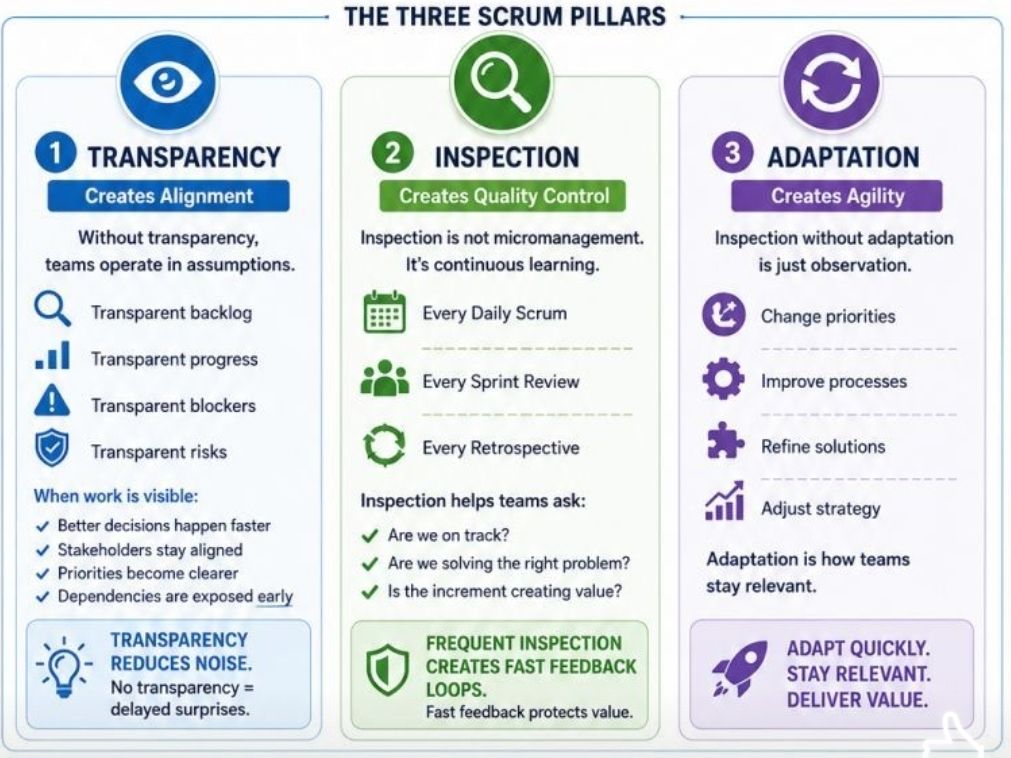
The three pillars of Scrum are Transparency, Inspection, and Adaptation. Together, they form the foundation of empirical process control—a methodology where decisions are based on observation and experience rather than unverified plans.
1. Transparency
Transparency ensures that all aspects of the process and progress are visible to both the team performing the work and the stakeholders. This requires a common, shared understanding of what constitutes “done” and maintaining open, honest communication. Key Scrum artifacts like the Product Backlog and Sprint Backlog are tools used to maintain this visibility.
2. Inspection
Scrum teams must regularly inspect their artifacts (like the product increment) and their overall progress toward the Sprint Goal to detect any unwanted variances or problems. This is achieved through established Scrum events such as the Daily Scrum, Sprint Review, and Sprint Retrospective.
3. Adaptation
If an inspection reveals that aspects of a process or the product are deviating outside acceptable limits, the team must adjust the process or the material being worked on. Adaptation involves making necessary changes as soon as possible to minimize further deviations and continuously improve the end product.
For more specific guidance, you can explore the official Scrum Alliance breakdown or learn more via Atlassian’s Agile Project Management Guide.


