

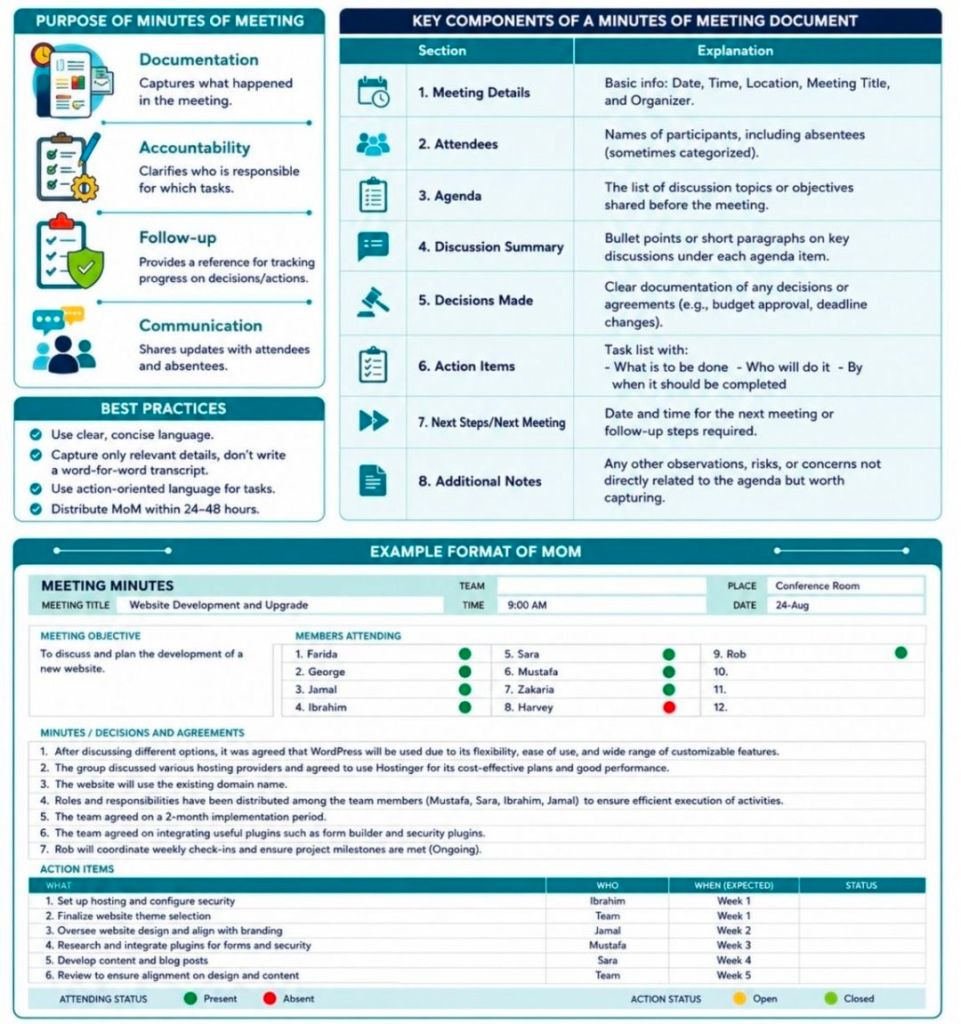
Minutes of Meeting – MOM
Minutes of Meeting (MoM), or MOM, is the official written record of a project meeting, capturing critical discussions, decisions made, and assigned action items.
In project management, MOM serves as a single source of truth to hold team members accountable, track project requirements, and provide a legal paper trail to prevent disputes over scope, timeline, or budget.
Essential Elements of an Effective MOM
To be effective, your meeting minutes should always contain the following core components:
- Meeting Overview: Project name, meeting title, date, time, and location (or virtual platform).
- Attendees & Absentees: A clear list of who was present (and their roles) and who gave apologies for being unable to attend.
- Agenda: The topics scheduled for discussion.
- Key Discussion Points: A concise summary of what was debated and the context behind decisions.
- Decisions Made: Clear, unambiguous notes on agreements, approvals, or rejections.
- Action Items: The most critical section. Every task must include a description, the Person in Charge (PIC), and a Due Date.
- Next Meeting: The date, time, and objective of the follow-up meeting.
Best Practices for Project Managers
- Draft Immediately: Write or format your minutes within the first hour post-meeting while the discussions are still fresh.
- Distribute for Sign-Off: Circulate the finalized document to all stakeholders to ensure everyone’s understanding matches and to allow for corrections.
- Store Securely: Maintain a chronological, searchable digital repository for all project meetings.


