

A Higher National Diploma (HND) is a Level 5 vocational qualification in the UK, equivalent to the first two years of a university bachelor’s degree. Designed to provide industry-specific practical skills, it typically takes two years of full-time study or three to four years part-time.
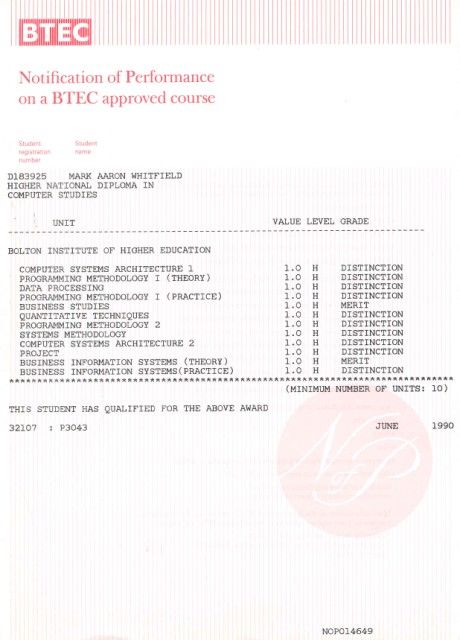
Historical Timeline of the HND
The HND has evolved from a niche engineering credential into a globally recognised vocational standard.
The Early Era: Origins and Industrial Focus (1920s–1950s)
- 1920: The Higher National Diploma was first introduced in England and Wales alongside the Ordinary National Diploma (OND) and Higher National Certificate (HNC).
- 1921–1923: Initial subject frameworks were established, starting with Mechanical Engineering (1921) and Electrical Engineering (1923).
- 1930s: The qualification expanded into Building (1929) and Commerce (1939) to support a growing industrial economy.
- Post-WWII: The 1944 Butler Act reorganised secondary education, but HNDs remained the primary route for advanced technical training in colleges.
The Expansion Era: Growth and New Governance (1960s–1970s)
- 1960s: HNDs gained prominence in polytechnics, addressing critical skills gaps through a practical approach to higher education.
- 1968–1969: Awards for HNDs saw a massive 665% increase compared to a decade prior, beginning to rival university “ordinary degrees” in popularity.
- 1972–1974: Under Margaret Thatcher (then Education Secretary), the Haselgrave Report recommendations led to moving qualifications from the City and Guilds to two new bodies: the Business Education Council (BEC) and the Technician Education Council (TEC).
The BTEC and Modernisation Era (1980s–2000s)
- 1983: BEC and TEC merged to form the Business and Technician Education Council (BTEC), which became the primary awarding body for HNDs.
- 1990s: BTEC merged with the University of London Examinations Board to form Edexcel (now part of Pearson).
- 1980s–90s: The curriculum diversified rapidly into modern sectors such as computing, business, catering, and performing arts.
- 2000s: Global expansion accelerated; for instance, the HND was formally introduced in Cameroon in 2002.
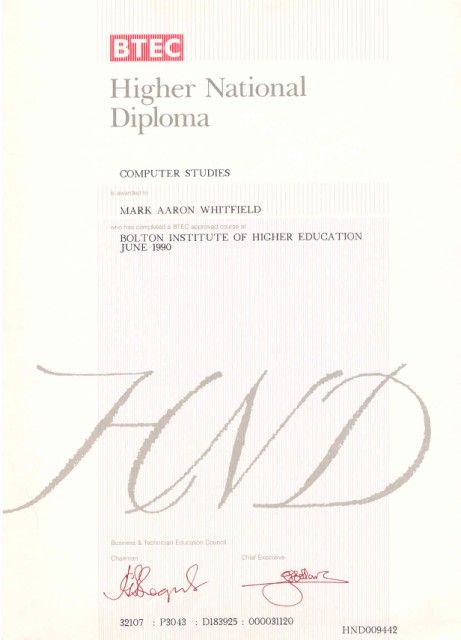
The Contemporary Era: Frameworks and Global Standard (2010s–Present)
- 2013–2014: Despite a decline in public sector colleges due to the rise of Foundation Degrees, HND student numbers at private providers grew from 13,000 to 30,000 in just one year.
- 2018: Major global curriculum updates were implemented to integrate digital literacy, sustainability, and entrepreneurship into traditional vocational subjects.
- 2020s: Current HNDs are positioned at Level 5 on the Regulated Qualifications Framework (RQF) and are delivered in over 60 countries.
Key Characteristics of the HND
- Academic Standing: Equivalent to Level 5 (Year 2 of a Degree).
- Progression: Over 95% of UK universities allow HND graduates to “top up” to a full bachelor’s degree, often entering directly into the final year.
- Assessment: Focuses on practical projects, case studies, and work placements rather than just theoretical exams.
HND Higher National Diploma Overview and Historical Timeline by Year

 PROject Templates