
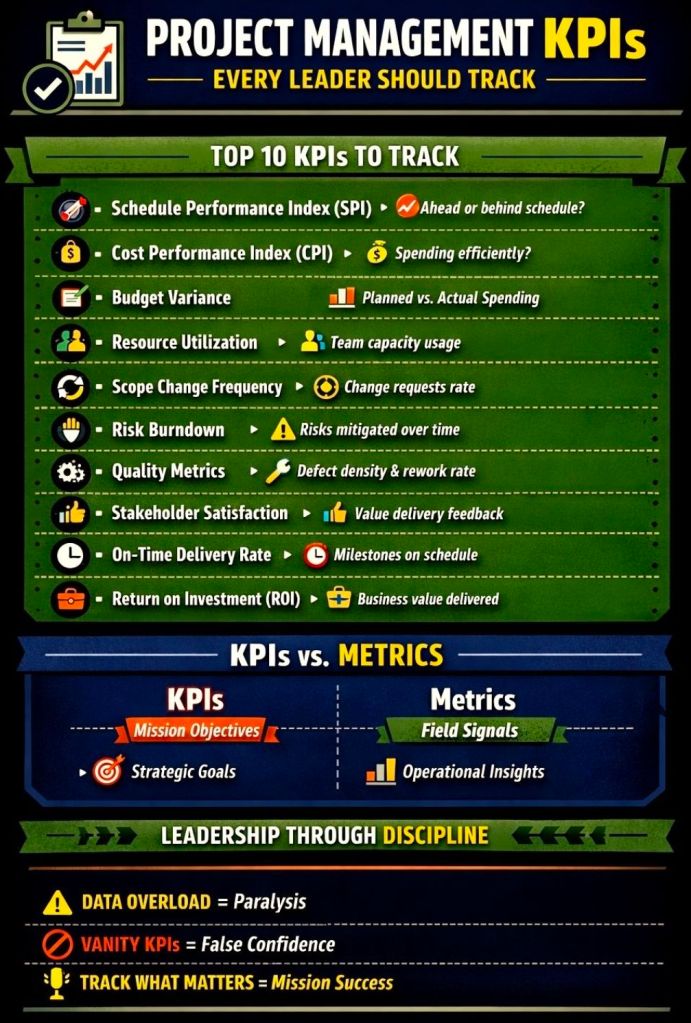
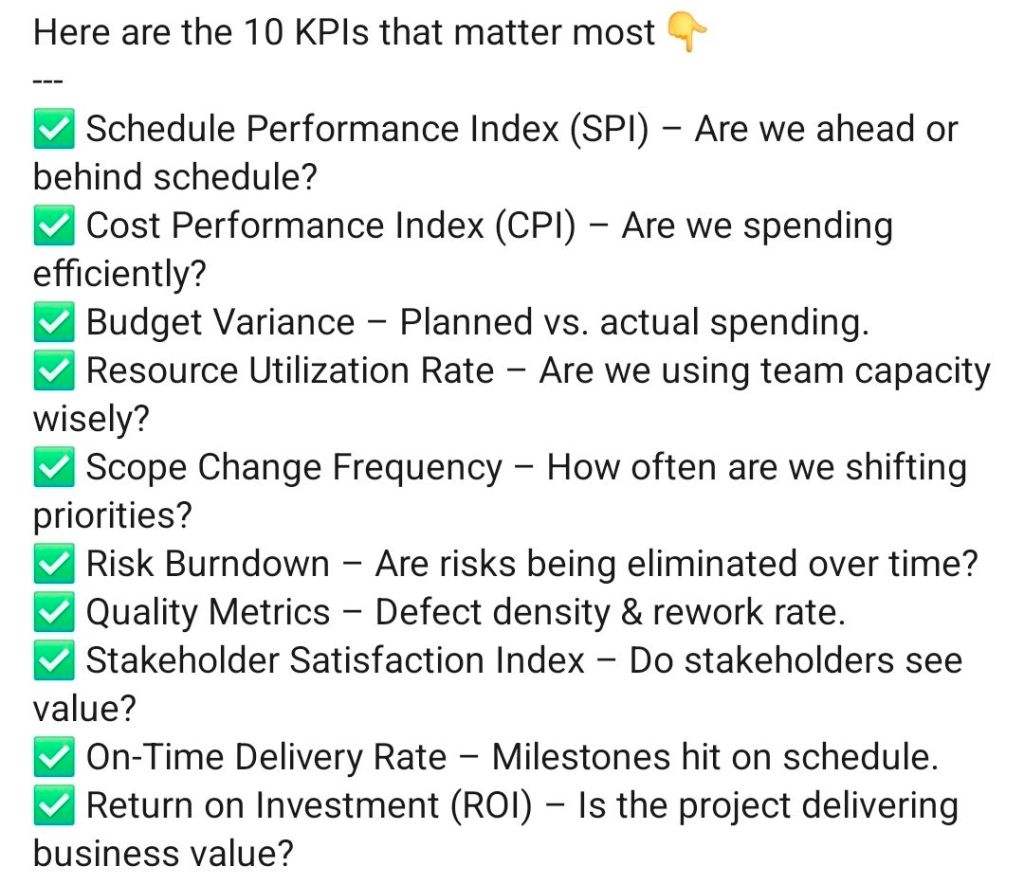
Project Management KPIs to track
 Download MS Project + Office Templates | Quick start PRINCE2, Agile & Waterfall Delivery - FREE Additions / Upgrades - SALE Buy 200+ Project Templates
Project Management KPIs to track
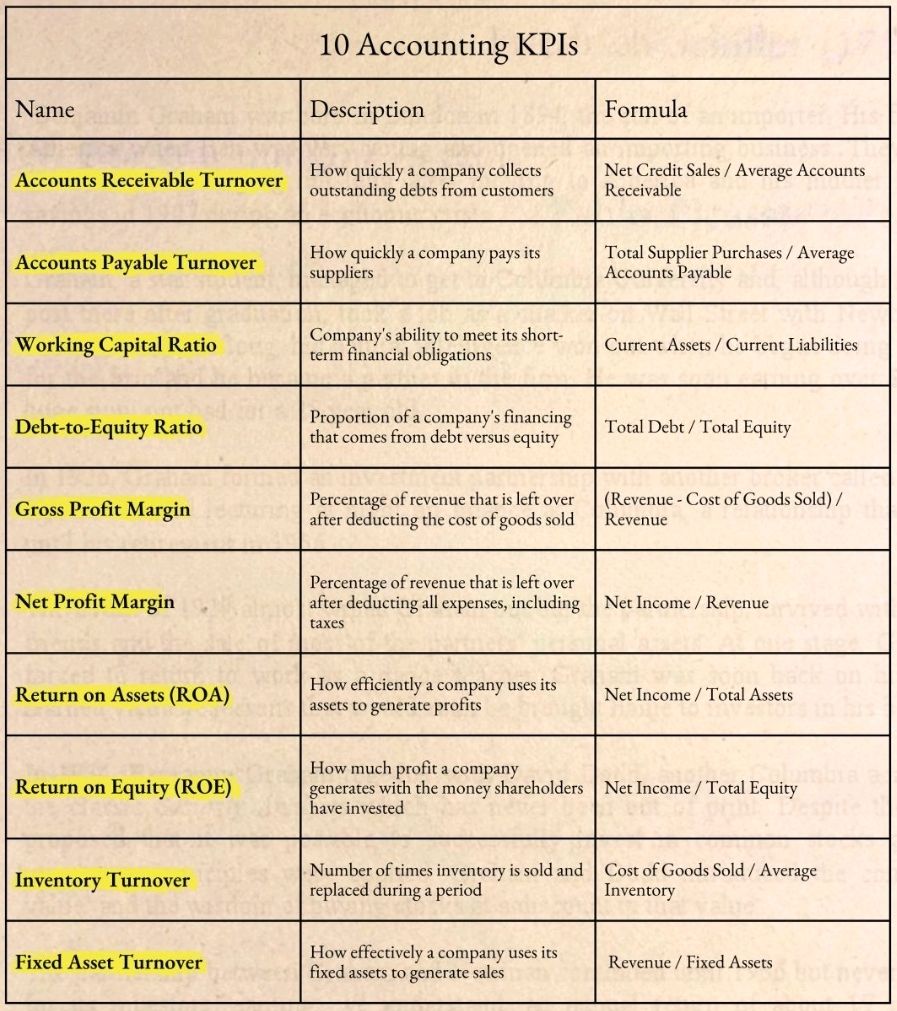

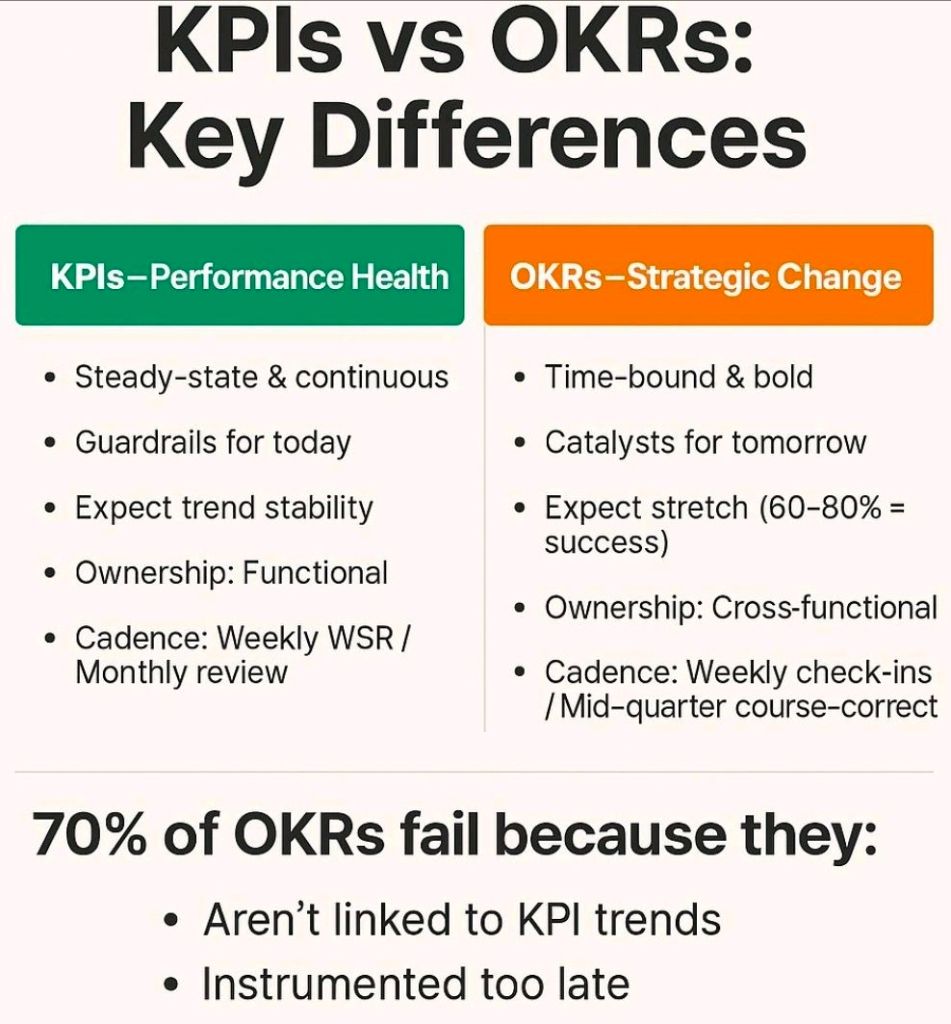
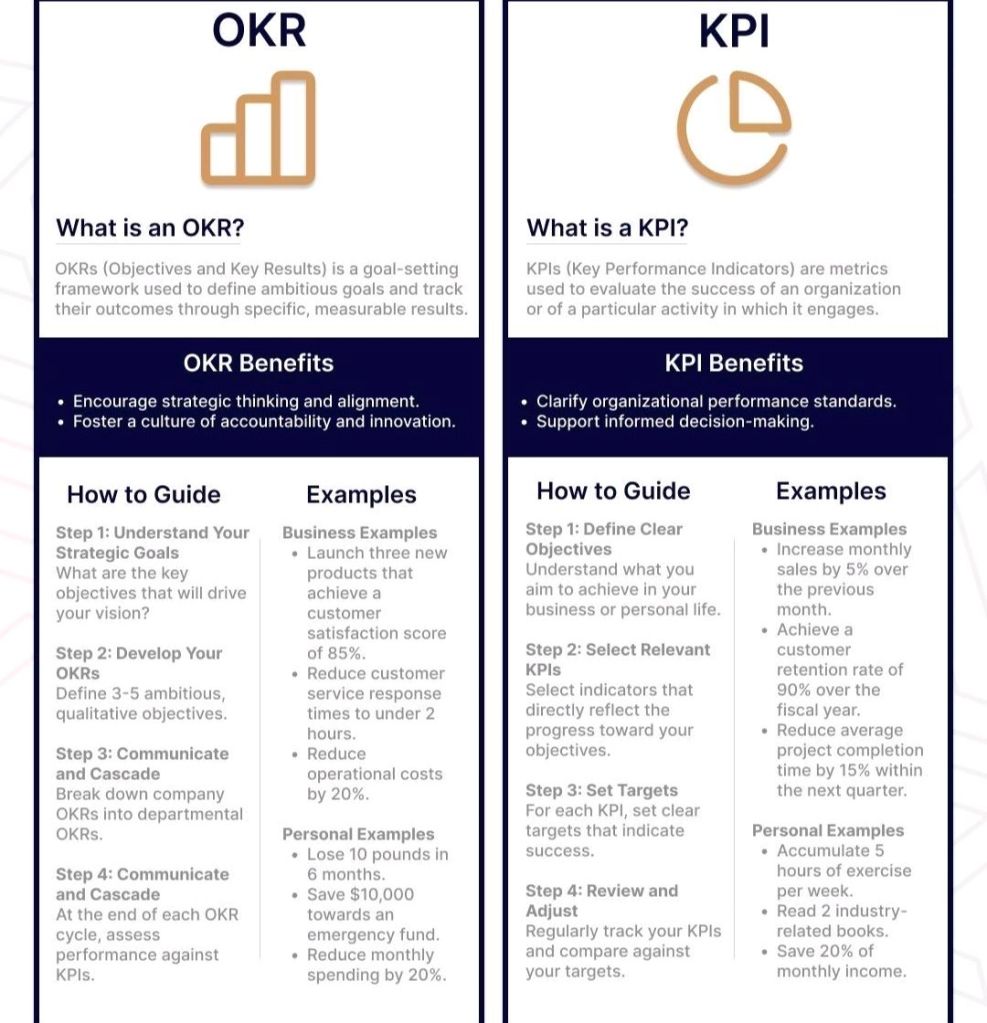
While OKRs (Objectives and Key Results) and KPIs (Key Performance Indicators) both measure performance, they serve fundamentally different purposes:
KPIs monitor the current health and steady-state of a business, while OKRs drive change, growth, and innovation.
OKR vs KPI: Importance and Impact in 2026
OKR vs KPI: What’s the Difference –
Key Differences at a Glance
Feature OKRs (Objectives & Key Results)
KPIs (Key Performance Indicators)
Purpose Drive change and transformation Monitor health and consistency
Focus Outcome-oriented (Where do we go?) Output-oriented (How are we doing?)
Timeframe Iterative cycles (typically quarterly)
Continuous and long-term
Nature Ambitious, “stretch” goals Realistic, attainable benchmarks
Origin Often collaborative (top-down & bottom-up) Typically management-led (top-down)
Understanding the Roles
KPIs (The Dashboard): Think of these as the gauges on a car’s dashboard, such as the fuel level or speedometer. They tell you if the “engine” is running smoothly. Common examples include monthly recurring revenue (MRR), customer churn rate, or website uptime.
OKRs (The Roadmap): These represent your destination and the landmarks along the way. An OKR identifies a specific problem to solve or a new territory to reach.
Objective: A qualitative, inspiring statement of what you want to achieve (e.g., “Become the market leader in the UK”).
Key Results: 3–5 measurable metrics that prove you’ve reached that objective (e.g., “Acquire 500 new enterprise clients”).
How They Work Together
The most effective organizations do not choose between them; they use both in a complementary system.
0KPIs signal the need for an OKR: If a KPI shows a negative trend (e.g., “Support response time has increased to 48 hours”), it becomes the trigger to set an OKR to fix it (e.g., “Objective: Restore world-class support speed”).
KPIs can be Key Results: A specific KPI target often serves as a Key Result within a larger strategic Objective.
Maintenance vs. Growth: KPIs safeguard the “business as usual” (BAU) while OKRs push the team to achieve breakthrough results beyond standard performance.

 PROject Templates