

The core electronic banking software product sp/ARCHITECT-BANK was originally developed by The Software Partnership (TSP) in Runcorn, Cheshire. Engineered natively for the fault-tolerant, high-availability architecture of Tandem Computers (now HPE NonStop), it served as a pioneer in remote desktop corporate banking and transaction routing.
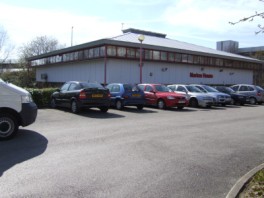
The technical evolution and feature history of the product span multiple corporate acquisitions—shifting from a purely proprietary mainframe package to an open-standard, distributed 3-tier middleware suite.
1985–1989: The Foundational Greenfield Era
During this period, TSP laid down the fault-tolerant codebase designed specifically to exploit Tandem’s unique hardware and operating system strengths.
- 1985 (Product Inception): TSP was co-founded by Nigel Walsh. System development focused completely on building a highly parallelized package within the Tandem Guardian OS and PATHWAY transaction processing monitor.
- 1987 (Enscribe Base Engine): Implemented record-locking mechanisms natively using Enscribe hierarchical/flat-file databases to support high-throughput, non-blocking writes.
- 1988–1989 (Client-Server Blueprint): Standardized
sp/ARCHITECTas an early client-server base package. This version enabled dial-up desktop terminal systems to query corporate multi-currency bank ledgers remotely.
1990–1994: Mainframe Scale-Up & Tier-1 Banking Adoptions
As the platform matured, engineering focused heavily on strict database optimization, structured standard testing, and major corporate multi-account electronic balancing.
- 1990 (Relational Data & Simulation): Migrated major ledgers to NonStop SQL. The engineering team built
sp/TESTBED, a custom terminal-emulation utility to simulate asynchronous PC-to-mainframe interfaces without utilizing live hardware lines. - 1991–1992 (Barclays Business Master II): TSP co-engineered modules for Barclays Business Master II (BBM II). This established dedicated “Serverclasses” within PATHWAY to process mass corporate inter-account transfers and balance updates.
- 1993 (Interactive Voice Integration): Engineered a specialized touch-tone integration layer for clients like Girofon (Denmark). This allowed standard telephone lines to dial into a Periphonics IVR (Interactive Voice Response) device, parsing telephony signals directly into backend COBOL85 mainframe instructions to read out balances.
- 1994 (Remote Desktop Banking Framework): Standardized desktop corporate banking pipelines across European operations, rolling out high-security connectivity modules tailored for TSB and the Bank of Scotland. Deluxe Data International officially acquired TSP in this era.
1995–1999: The Hardware Migration & Protocol Shift
The late 1990s demanded that the core software transition out of isolated, legacy instruction sets into open enterprise environments.
- 1995–1996 (The RISC / pTAL Overhaul): Tandem migrated its physical hardware underlying architecture from CISC to MIPS-based RISC structures.
sp/ARCHITECTunderwent an extensive code rewrite, migrating tightly coupled Tandem Application Language (TAL) components into pTAL (portable TAL) to maintain performance benchmarks on the new instruction sets. - 1997–1998 (Compaq Open Standards): Following Compaq’s acquisition of Tandem, the software suite decoupled its deep-level OS calls. Modules were added to handle early open tcp/ip-based financial protocols, preparing the system for web networks.
- 1999 (Global 24-Hour Settlement Support): Overhauled the batch clearing scripts to maintain sub-second transaction routing with 100% data non-repudiation, serving multi-tenant international nodes.
2000–2005: 3-Tier Modernization & Transition to Connex Advantage
The system evolved past terminal-based banking into a standardized, decoupled middleware system capable of interacting with modern web fronts.
- 2001–2002 (C/C++ Modernization): Deluxe Data and eFunds initiated a sweeping code standardization. Legacy pTAL core operational modules were enclosed within C/C++ object-oriented wrappers, shielding the low-level processing loops from front-end changes.
- 2003 (3-Tier Decoupling): Architecturally segregated the product into three explicit layers:
- Front-End: Multi-channel terminal networks
- Middleware: The core pTAL/PATHWAY transactional engine
- Clearance: Standardized Clearing House and Settlement connectivity
- 2004–2005 (The Connex Evolution): The foundational
sp/ARCHITECTplatform was structurally absorbed and consolidated into the broader CONNEX Advantage software suite, establishing a unified ecosystem for high-volume Electronic Funds Transfer (EFT) and commercial card transaction processing.

