

Capgemini SE was founded on 1 October 1967 by French entrepreneur Serge Kampf in Grenoble, France. Originally launched as a local data processing and enterprise management firm called Sogeti, the company expanded through more than 40 strategic acquisitions to become a global leader in IT consulting, digital transformation, and engineering services.
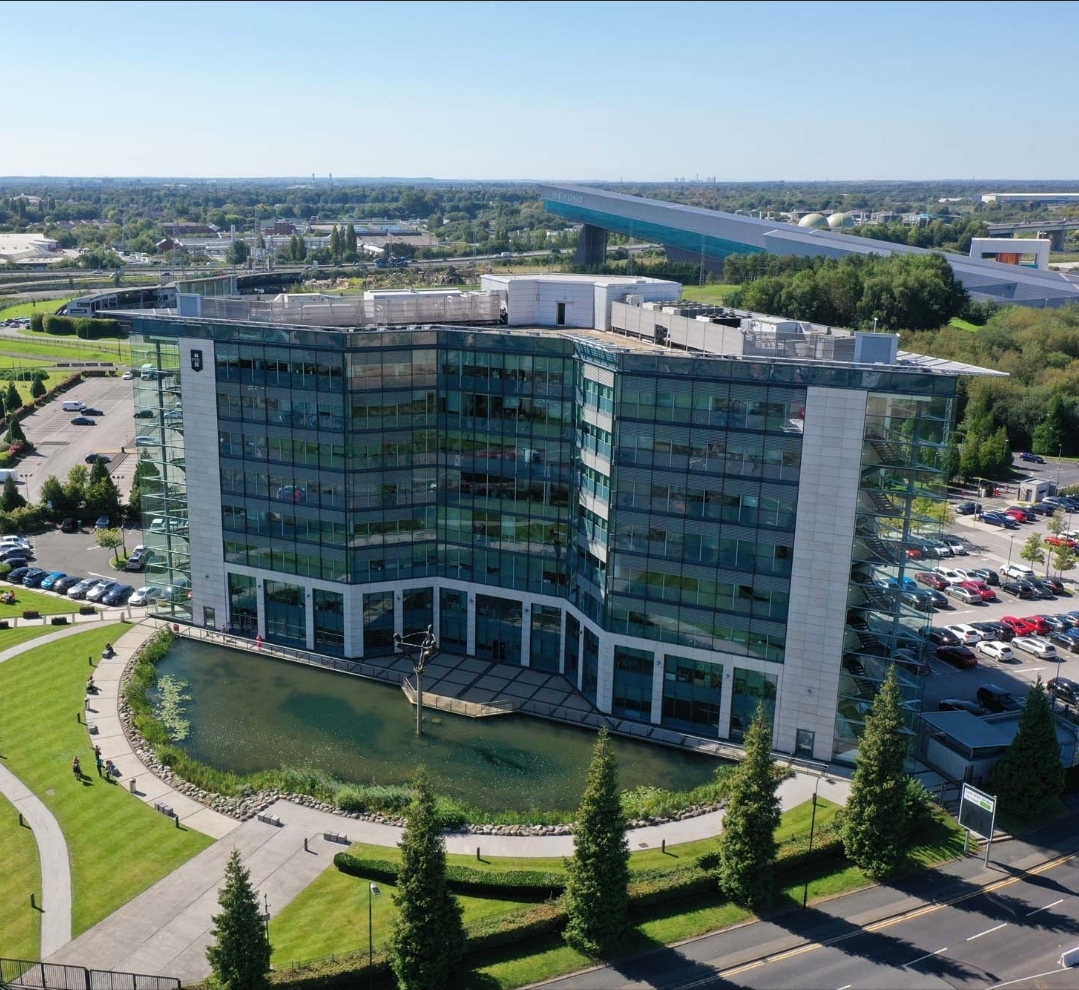
I was at Capgemini, January 2016 to Present: Capgemini UK, Floor 7, Venus Building, Trafford Quays, Manchester. M41 7HA
Website: www.capgemini.com/gb-en/
The detailed history of Capgemini is structured into five distinct operational eras.
Era 1: Founding and Structural Formations (1967–1979)
This era established Capgemini’s core corporate identity and initial market footprint across Europe and North America through foundational mergers.
- 1967: Serge Kampf establishes Sogeti (Société pour la Gestion de l’Entreprise et le Traitement de l’Information) to offer IT services during the early business computing wave.
- 1973: Sogeti acquires a majority stake in its primary European IT software competitor, CAP (Centre d’Analyse et de Programmation).
- 1974: Sogeti expands into the US market by acquiring New York-based Gemini Computer Systems.
- 1975: The company consolidates these entities and officially rebrands as CAP Gemini Sogeti.
Era 2: Aggressive Expansion and Public Listing (1980–1999)
During this period, the company scaled corporate revenues, institutionalised its practices, and transitioned into a publicly traded corporation.
- 1981: The launch of Cap Gemini America occurs following the acquisition of the Milwaukee-based data conversion firm, DASD Corporation.
- 1982: Annual corporate revenues cross the milestone of 1 billion French Francs (FFr).
- 1984: English is officially adopted as the group’s corporate operational language to facilitate international client alignment.
- 1985: Cap Gemini Sogeti lists on the Second Market of the Paris Stock Exchange.
- 1987–1988: The firm acquires full control of French competitor Sesa, shifts entirely to the main Paris Bourse public listing, and joins the CAC 40 index.
- 1990: The group scales its UK market presence by purchasing the Hoskyns Group for $345 million.
- 1991: Gemini Consulting is formed by integrating five separate management consultancies to isolate strategic advisory services.
- 1993: Following its first-ever net financial loss during a global recession, Cap Gemini executes “Genesis”, a complete structural and operational decentralisation turnaround program.
- 1996: The corporate title is simplified to Cap Gemini S.A. alongside the debut of a unified corporate logo.
Era 3: The Dot-Com Boom and Global Rebranding (2000–2009)
This era was marked by high-value consulting acquisitions, fiscal restructuring after the tech bubble burst, and a massive pivot to global delivery models.
- 2000: Cap Gemini buys Ernst & Young Consulting for approximately $11 billion at the peak of the dot-com bubble, briefly renaming itself Cap Gemini Ernst & Young.
- 2001–2003: The dot-com crash forces severe operational downscaling and cost-cutting, leading to the sell-off of non-core North American consulting arms. The “Ernst & Young” suffix is dropped.
- 2004: The corporate moniker is permanently simplified to a single word: Capgemini.
- 2007: Capgemini expands its primary offshore development, engineering, and application delivery footprint in India by acquiring Kanbay International.
Era 4: The Digital Transformation Shift (2010–2018)
Capgemini shifted its emphasis from traditional enterprise IT maintenance to cloud architecture, agile delivery, data analytics, and user experience design.
- 2012: Long-time executive Paul Hermelin is named Chairman and CEO, navigating the modern digital consulting landscape.
- 2015: Capgemini acquires US-headquartered tech firm iGate for $4 billion, drastically strengthening its position in the North American financial services sector.
- 2017: The company marks its 50th anniversary by deploying an updated corporate identity featuring a handwriting-inspired wordmark pays homage to founder Serge Kampf.
- 2018: Capgemini Invent is launched as a dedicated global business line, combining traditional management consulting with the digital design studios it acquired (such as LiquidHub, Fahrenheit 212, and Idean).
Era 5: Intelligent Industry and The AI Wave (2019–Present)
This era outlines the integration of deep engineering with IT, alongside a corporate focus on automated enterprise systems and global operations.
- 2019–2020: Capgemini executes a friendly €3.6 billion takeover of Altran, a major global engineering and R&D specialist. This launch created Capgemini Engineering, pioneering the “Intelligent Industry” market segment.
- 2020: Aiman Ezzat succeeds Paul Hermelin as CEO, steering the company through post-pandemic remote delivery models.
- 2021–2024: The group expands down-funnel delivery in cloud automation, cybersecurity, and enterprise AI transformations. Global headcount stabilizes at around 340,000 employees across more than 50 countries.
- 2025–2026: Operations pivot heavily toward deploying production-ready generative AI ecosystems for Fortune 500 clients, backed by a structured enterprise commitment to achieve verified net-zero carbon emissions by 2040.


