

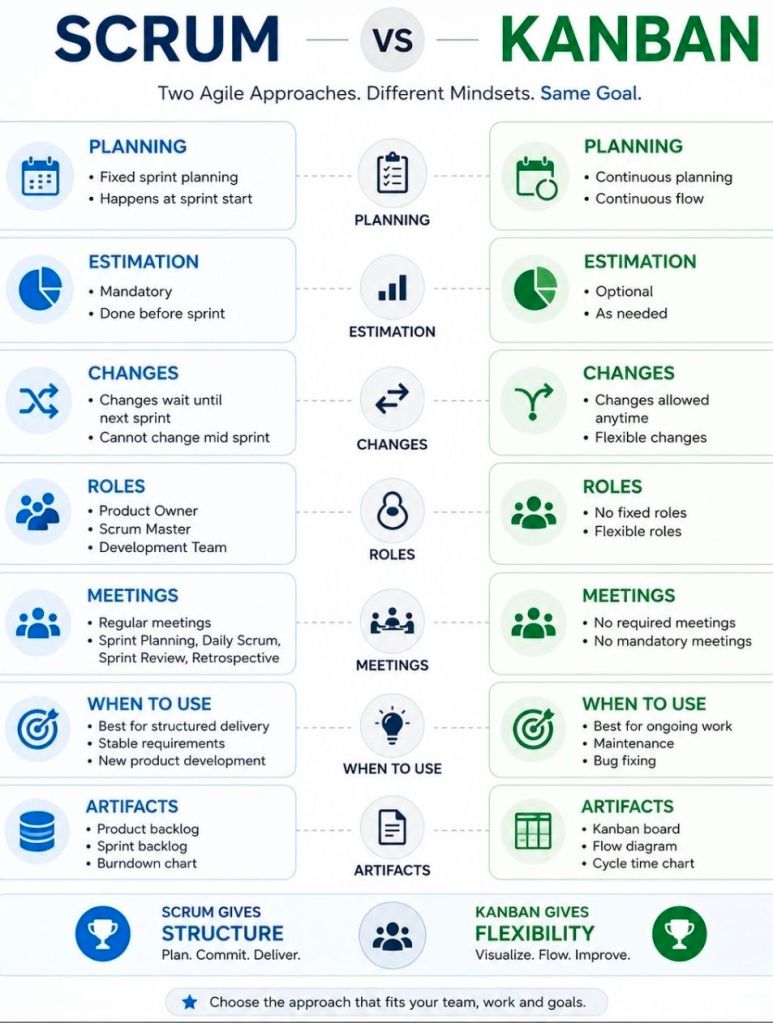
Scrum and Kanban are both popular Agile project management frameworks, but Scrum relies on rigid, time-boxed cycles with explicit roles, while Kanban focuses on continuous workflow and limiting work-in-progress to resolve bottlenecks.
Core Mechanics of Scrum
- Time-Boxed Sprints: Work is divided into locked iterations where the team commits to a specific batch of deliverables.
- Strict Ceremonies: Requires mandatory structural events including Sprint Planning, Daily Scrums, Sprint Reviews, and Retrospectives.
- Clear Accountabilities: Relies on a Product Owner to dictate priorities, and a Scrum Master to eliminate work blockers.
Core Mechanics of Kanban
- WIP Limits: Explicitly caps the maximum number of active items allowed in any single workflow column to prevent overloading.
- Continuous Delivery: Tasks flow from the backlog to “Done” independently as resources allow, rather than in batched releases.
- Evolutionary Change: Fits seamlessly over existing operational hierarchies without requiring an organizational overhaul.
How to Choose the Right Framework
Choose Scrum if:
- You are building a complex product requiring highly disciplined planning cycles.
- The project requires substantial stakeholder engagement and frequent product reviews.
- Your team prefers structured routine, cross-functional collaboration, and highly concrete targets.
Choose Kanban if:
- Your workflow is dictated by inbound, unpredictable operational tasks (like IT support or bug tracking).
- Priorities change rapidly, demanding immediate pivot capabilities mid-week.
- You want a visual aid to reveal pipeline bottlenecks without altering current team roles.
Note: Many organizations merge these models into a hybrid approach known as Scrumban, leveraging Scrum’s regular event cadences alongside Kanban’s visual WIP flexibility.


