

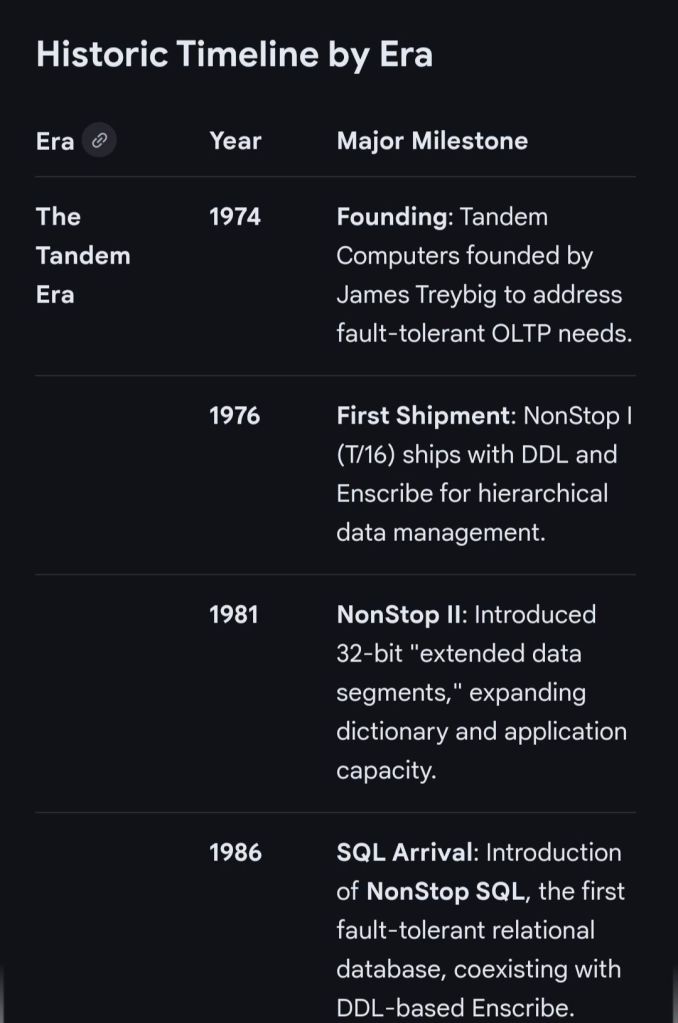
The HPE NonStop Data Definition Language (DDL) dictionary is a specialized subsystem used to define and manage data objects for Enscribe files and translate those definitions into source code for various programming languages. It serves as a central repository for metadata, ensuring consistent data structures across applications written in C, COBOL, TAL, or TACL.
Program Summary
The DDL dictionary program functions as a metadata management tool. Key capabilities include:
- Centralised Definition: Defines records, fields, and file attributes in a hierarchical structure.
- Code Generation: Translates DDL definitions into language-specific source code (e.g., COBOL copybooks or C headers).
- Dictionary Maintenance: Allows users to create, examine, and update dictionaries to reflect changes in data structures.
- Interoperability: Modern tools like Ddl2Bean convert dictionary files into Java Beans or XML, enabling cross-language and cross-platform use.
Future Outlook
The future of HPE NonStop DDL focuses on modernisation and integration rather than replacement.
- Data Virtualization: Integration with AI factories and object storage platforms to expose legacy metadata in open-table formats like Apache Iceberg.
- API Centricity: Enhancements to the NonStop API Gateway will likely use DDL metadata to automate REST/JSON service orchestration.
- Real-time Analytics: Native streaming of NonStop data into platforms like Kafka, using DDL definitions to map real-time changes into analytics-ready formats.
Internet Links & Manuals
- Primary Reference: HPE Data Definition Language (DDL) Reference Manual
- Java Integration: DDL to Java Bean (NSJI) Programmer’s Reference
- Modern Tools: HPE Shadowbase DDL Transformation Guide
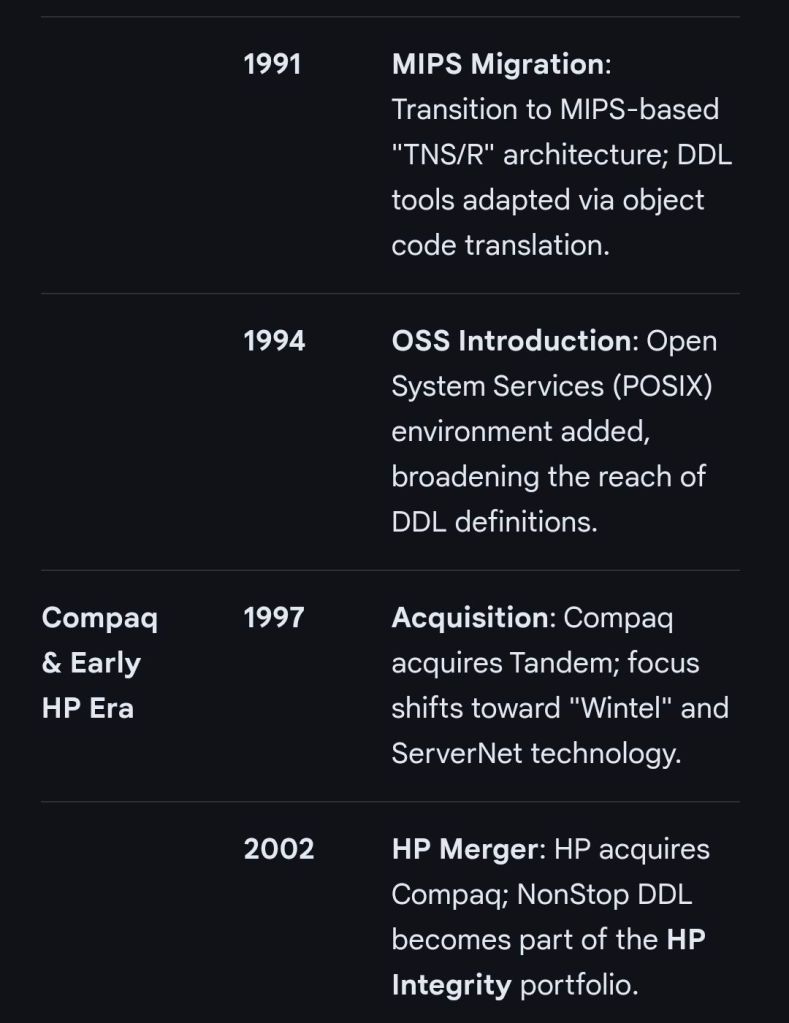
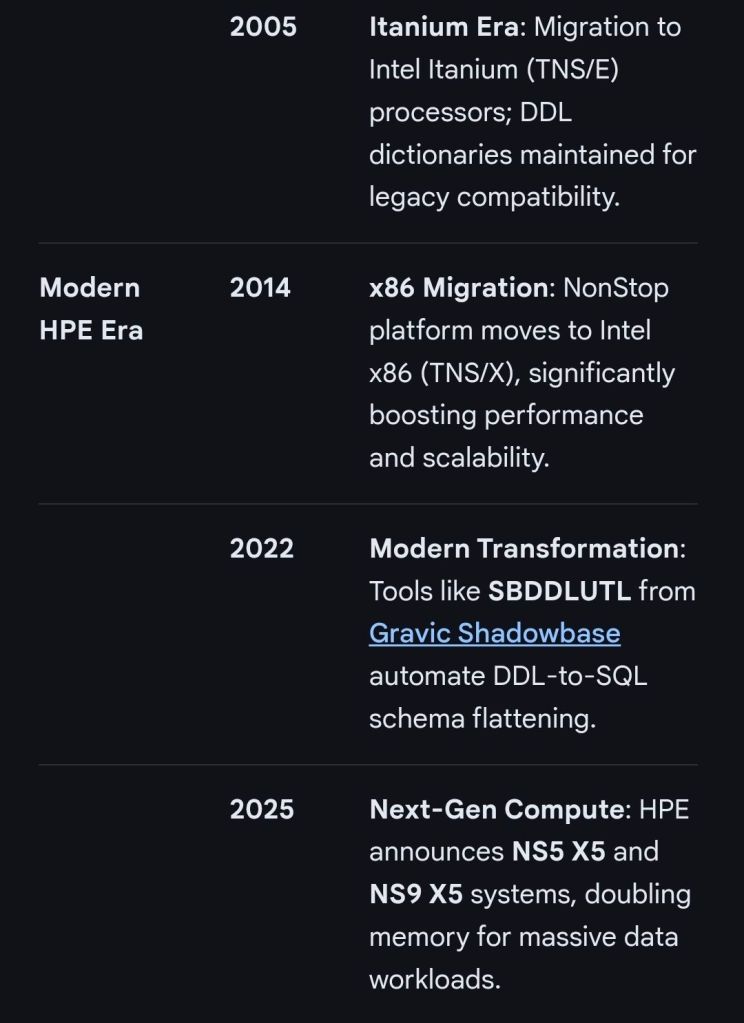
HPE NonStop Data Definition Language (DDL) dictionary overview and timeline
 PROject Templates