

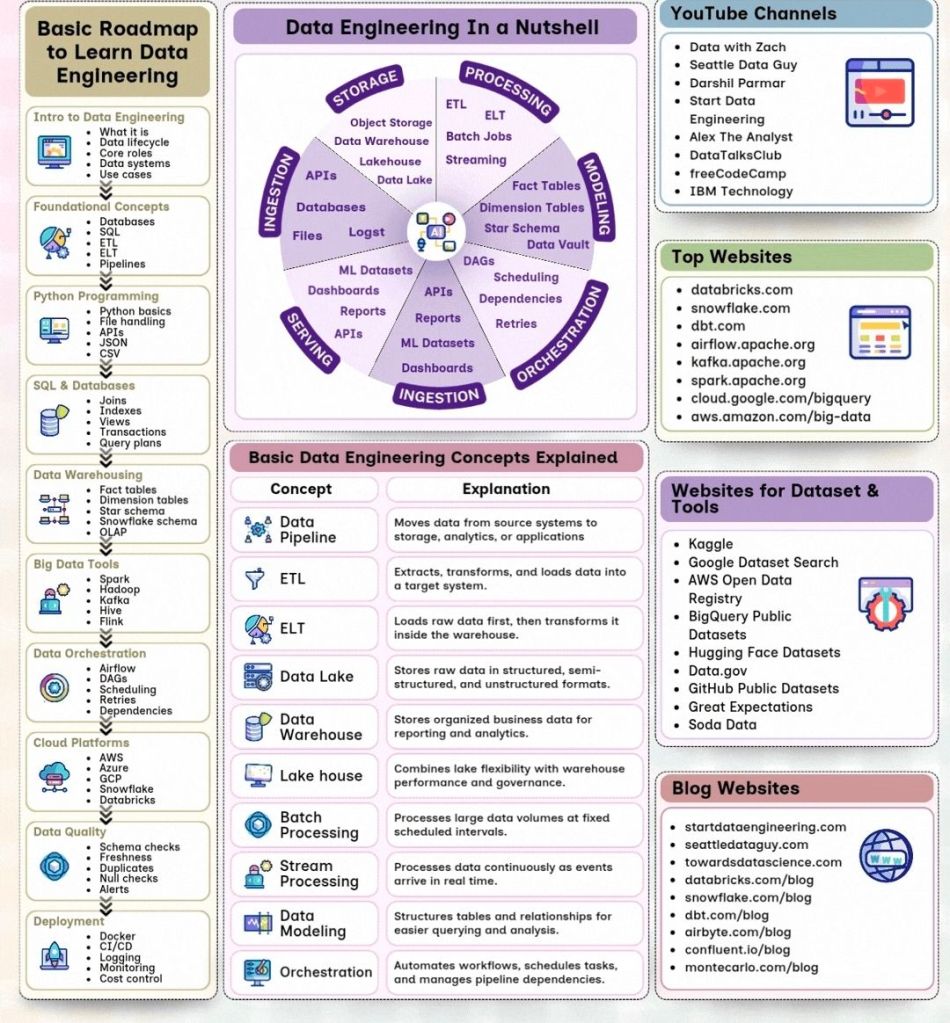
Extract, Transform, Load (ETL) is a foundational data integration process that consolidates raw data from multiple disparate sources—such as CRM systems, databases, and APIs—into a single, centralized destination, typically a data warehouse or data lake. It is crucial for ensuring that data is clean, consistent, and ready for analytics, BI reporting, and machine learning.
Core ETL Process Steps
- Extract: Raw data is pulled from varied sources (structured or unstructured) into an intermediate staging area.
- Transform: The staged data is cleaned, formatted, and combined based on business rules to ensure consistency.
- Load: The prepared data is moved from the staging area into the final target data warehouse.
Key Benefits
- Data Quality & Consistency: Standardizes formats (e.g., date formats, currency) and cleans up errors.
- Historical Context: Combines legacy data with new information for long-term analysis.
- Automation: Automates recurring data processing tasks, saving time for data engineers.
ETL vs. ELT
- ETL (Transform before Loading): Transforms data on a separate processing server before loading, ideal for complex, heavy transformations.
- ELT (Load then Transform): Loads raw data directly into the target warehouse (e.g., Snowflake, BigQuery) and transforms it using the warehouse’s power. This is better for large, unstructured datasets.
Detailed Summary
1. Extract
Extraction is the first phase, where raw data is gathered from various heterogeneous sources.
- Sources: SQL servers, NoSQL databases, SaaS applications (CRM/ERP), JSON/XML files, and IoT sensors.
- Methods:
- Full Extraction: The entire source is copied; best for small tables.
- Incremental Extraction: Only data modified since the last run is extracted.
- Update Notification: Source system alerts the ETL tool of a change.
- Staging Area: Extracted data is temporarily stored in a “staging area” (or landing zone) to avoid placing heavy loads on production systems during transformation.
2. Transform
This is the most compute-intensive phase, where raw data is converted into a usable format.
- Cleansing: Mapping NULL values to 0, removing duplicates, and fixing errors.
- Standardization: Converting character sets, date/time formats, or measurement units (e.g., kilograms to pounds).
- Data Aggregation: Summarizing data (e.g., total sales per store per day).
- Enrichment/Derivation: Creating new calculated values (e.g., calculating profit from revenue and cost).
- Encryption/Masking: Anonymizing PII (Personally Identifiable Information) to comply with GDPR/HIPAA regulations.
3. Load
The final phase transfers the cleaned and transformed data into the target destination.
- Target Systems: Data warehouses (e.g., Amazon Redshift, Snowflake, Google BigQuery) or Data Lakes.
- Loading Methods:
- Full Load: Wiping and replacing all data in the target.
- Incremental Load: Only loading new/updated data (the “delta”) to the target at regular intervals.
- Automation: The process is typically automated to run during off-hours, ensuring the data is ready for morning reports.
Modern Trends and Tools
- Cloud-Native ETL: Tools like AWS Glue, Azure Data Factory, and Google Cloud Dataflow allow for serverless, scalable data integration.
- Reverse ETL: Moving transformed data from the warehouse back to operational systems (like Salesforce) to activate insights.
- Streaming ETL: Processing data in real-time as it arrives, rather than waiting for batch updates, using tools like Apache Kafka.
- DataOps: Applying DevOps principles (automation, testing) to data pipelines to ensure reliability and faster deployment.
When to Choose ETL vs. ELT
- Choose ETL when: You need to comply with strict data security, perform complex transformations before data hits the warehouse, or have limited computing power in your target database.
- Choose ELT when: You are using a cloud warehouse, dealing with massive unstructured data volume, or need high-speed ingestion.


