

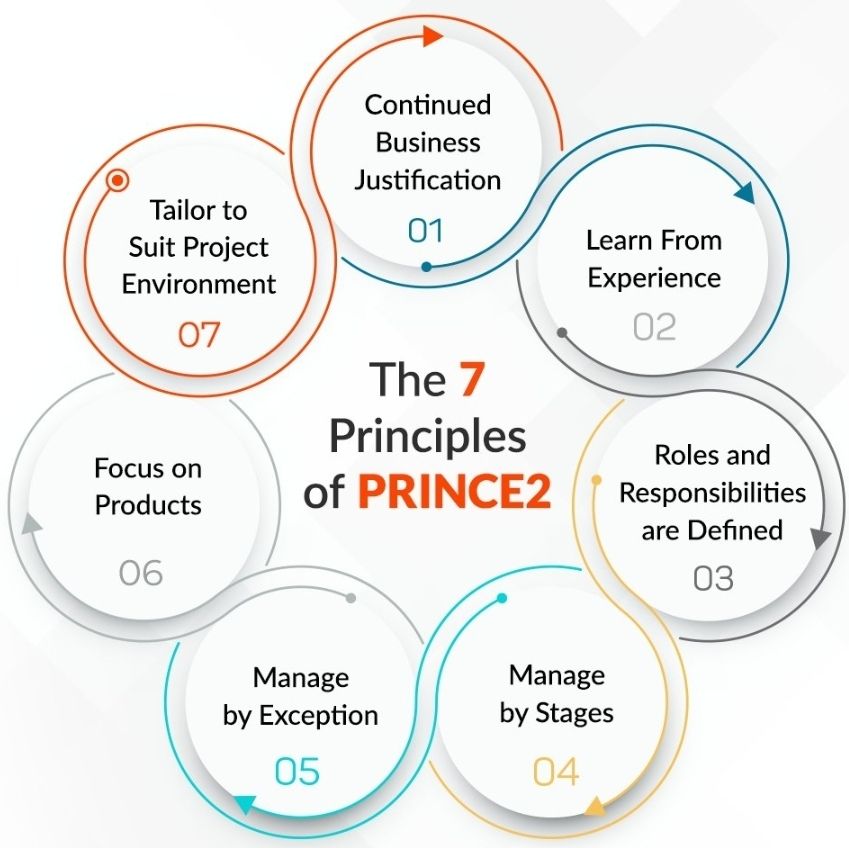
The PRINCE2 (PRojects IN Controlled Environments) framework is built on seven core principles that serve as guiding obligations for any project using this methodology. For a project to be considered a “PRINCE2 project,” all seven must be applied.
- Continued Business Justification: A project must have a valid reason to start and must remain justified throughout its lifecycle. This is documented in a Business Case, which is regularly reviewed to ensure the project remains viable, desirable, and achievable.
- Learn from Experience: Project teams are required to seek out lessons from previous projects and record new lessons as the current project progresses. A Lessons Log is typically used to capture these insights.
- Defined Roles and Responsibilities: Every person involved must understand what is expected of them and who is responsible for specific tasks. PRINCE2 defines a clear management hierarchy: Project Board (Direction), Project Manager (Management), and Team Manager (Delivery).
- Manage by Stages: Projects are broken down into manageable chunks called management stages. Each stage acts as a “stop/continue” decision point for the Project Board to assess progress before committing more resources.
- Manage by Exception: Senior management (Project Board) only intervenes when the project deviates beyond agreed tolerances for time, cost, quality, scope, risk, or benefits. This empowers the Project Manager while ensuring efficient use of executive time.
- Focus on Products: The methodology prioritizes the definition and delivery of high-quality products (outputs) rather than just completing activities. Product descriptions specify the quality criteria and requirements for each deliverable.
- Tailor to Suit the Project: PRINCE2 is not a rigid “one-size-fits-all” approach; it must be adapted to the project’s specific scale, complexity, and environment. Tailoring ensures that the controls are appropriate for the level of risk involved.

 PROject Templates