

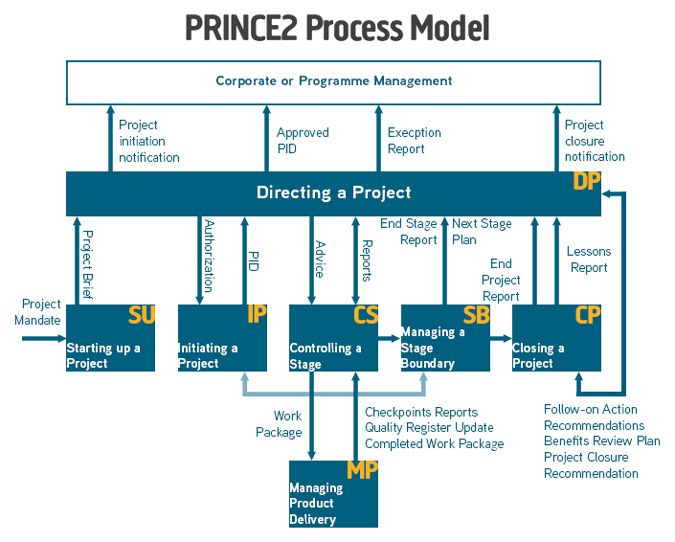
The PRINCE2 process model provides a structured, process-driven roadmap for managing a project from its initial conception to formal closure. It consists of seven core processes that define specific activities, responsibilities, and decision points across the project lifecycle.
The 7 PRINCE2 Processes
The processes are designed to ensure control and align with the project’s management levels:
- Starting Up a Project (SU): A pre-project process that filters out unviable ideas. It focuses on confirming if there is a “viable and worthwhile” business case and appoints the Project Manager and Executive.
- Directing a Project (DP): Spans the entire project from start to finish. It is the responsibility of the Project Board, which provides strategic oversight, makes key decisions (e.g., authorising stages), and manages by exception.
- Initiating a Project (IP): Occurs during the first management stage. It involves detailed planning to establish solid foundations, resulting in the Project Initiation Documentation (PID), which includes the project plan, risk management approach, and full business case.
- Controlling a Stage (CS): Focuses on the Project Manager’s day-to-day management of a stage. This includes assigning work to teams, monitoring progress, and dealing with issues or risks within agreed tolerances.
- Managing Product Delivery (MP): Governs the link between the Project Manager and Team Managers. It is where the “specialist products” (actual deliverables) are created, quality-checked, and delivered.
- Managing a Stage Boundary (SB): Occurs at the end of each management stage (except the final one). The Project Manager reviews the current stage, updates the project plan and business case, and plans the next stage for Board approval.
- Closing a Project (CP): Ensures an orderly end to the project. It confirms that objectives have been met, products have been accepted by the user, and lessons are captured before the project is formally disbanded.
Hierarchy of Management Levels
The process model operates across four distinct levels of authority:
- Corporate or Programme Management: Sets the initial project mandate.
- Directing (Project Board): Responsible for overall governance and major decisions (Directing a Project).
- Managing (Project Manager): Handles daily management and stage control (Controlling a Stage, Initiating a Project).
- Delivering (Team Members/Managers): Focuses on creating the physical products (Managing Product Delivery).
Key Characteristics
- Management Stages: Projects are broken into at least two stages (Initiation and at least one Delivery stage) to provide “stop/go” decision points.
- Triggers: Each process is activated by a specific trigger, such as a “Project Mandate” from corporate management to start the SU process.
- Management Products: These are documents like the Business Case, Project Brief, and Highlight Reports used to facilitate control and communication.

 PROject Templates