

Leigh, a historic market town in South Lancashire, evolved from a collection of medieval agricultural townships into a powerhouse of the Industrial Revolution. Below is a timeline of its development.
Early History & Foundations
- Ancient Origins: Neolithic stone axes and Bronze Age spearheads suggest activity as early as 1500–1000 BC.
- Medieval Growth: The name “Leigh” (Saxon for “meadow” or “pasture”) was recorded as Leech in 1264. The town was the centre of an ecclesiastical parish including the townships of Bedford, Pennington, and Westleigh.
- 1642: During the English Civil War, local “Chowbenters” (men from nearby Atherton) defeated Royalist troops in a battle at Leigh on 2nd December.
- 1651: The Earl of Derby spent his final night at the King’s Arms in Leigh before his execution in Bolton.
Industrial Revolution & Expansion
- 1795: The Bridgewater Canal was extended to Leigh, linking the town to Manchester’s industrial network.
- 1820: The Leigh Branch Canal opened, connecting the town to the Leeds and Liverpool Canal.
- 1828: The Bolton and Leigh Railway opened—the first public railway in Lancashire.
- 1839: The “Leigh Feight” occurred on 14th August, a major Chartist protest and riot involving over 2,000 people.
- 1850s: The Leigh Union Workhouse was established at Atherleigh.
- Late 19th Century: Large multi-storey cotton mills like Leigh Spinners (Grade II*) and Mather Lane Mill (Grade II) transformed the skyline.
Civic Development
- 1875: The townships of Bedford, Pennington, and Westleigh merged to form the Leigh Local Board.
- 1894: Leigh became an Urban District.
- 1899: Leigh was granted a Royal Charter, becoming a Municipal Borough.
- 1907: The current Leigh Town Hall was completed on Market Street.
- 1920: Pennington Hall and its grounds were gifted to the people of Leigh, eventually becoming Pennington Park.
Modern Era
- 1974: Under the Local Government Act 1972, the Municipal Borough was abolished and Leigh became part of the Metropolitan Borough of Wigan in Greater Manchester.
- 1992: The last coal mines in the area, Bickershaw and Parsonage Collieries, closed on 13th March.
- 2008: Leigh Sports Village was officially opened by Queen Elizabeth II.
- 2016: The Leigh-Salford-Manchester Guided Busway opened to provide rapid transit to Manchester city centre.
- 2023: The Leigh Leopards rugby league team won the Challenge Cup for the first time in 52 years.
Leigh’s history is a classic Lancashire tale of transition from a rural collection of townships to an industrial powerhouse. Here is a timeline of its most significant milestones:
Early Origins & Medieval Period
- Stone Age & Roman Era: Archaeological finds in the area include a Stone Age axe in Pennington and a Roman coin in Bedford.
- 12th Century: The name “Leigh” (from the Old English leah, meaning a woodland clearing) appears in records. The ancient parish originally consisted of six townships: Astley, Atherton, Bedford, Pennington, Tyldesley cum Shakerley, and Westleigh.
- 1189–1199: Higher Hall, the manor house of Westleigh, dates back to the reign of Richard I.
Conflict & Industrial Revolution
- 1642: During the English Civil War, local Parliamentarians (the “Chowbenters”) defeated Royalist troops in the Battle of Leigh.
- 1760s: Local legend attributes the invention of the spinning jenny and the water frame to Thomas Highs of Leigh, marking the start of its textile dominance.
- 1795–1820: The Bridgewater Canal was extended to Leigh (1795), followed by the Leigh branch of the Leeds and Liverpool Canal (1820), making the town a critical hub for coal and textiles.
- 1828: The Bolton and Leigh Railway opened for freight, becoming the first public railway in Lancashire.
- 1839: The “Leigth Feight” occurred on 14 August, when a mob of 2,000 Chartist strikers clashed with troops over high unemployment and living costs.
Civic Development & Modern Era
- 1875: The townships of Bedford, Pennington, and Westleigh merged to form the Leigh Local Board, officially adopting “Leigh” as the town’s name.
- 1899: Leigh was granted a Royal Charter to become a Municipal Borough.
- 1907: The current Leigh Town Hall, designed by J.C. Prestwich, was completed.
- 1911: The textile industry peaked, with over 6,000 people employed in the town’s mills.
- 1974: Under local government reorganisation, Leigh ceased to be an independent borough and became part of the Metropolitan Borough of Wigan in Greater Manchester.
- 2008: The Leigh Sports Village opened, providing a modern home for the Leigh Leopards rugby league team.
- 2016: The Leigh-Salford-Manchester guided busway opened, re-establishing a rapid transport link to Manchester.
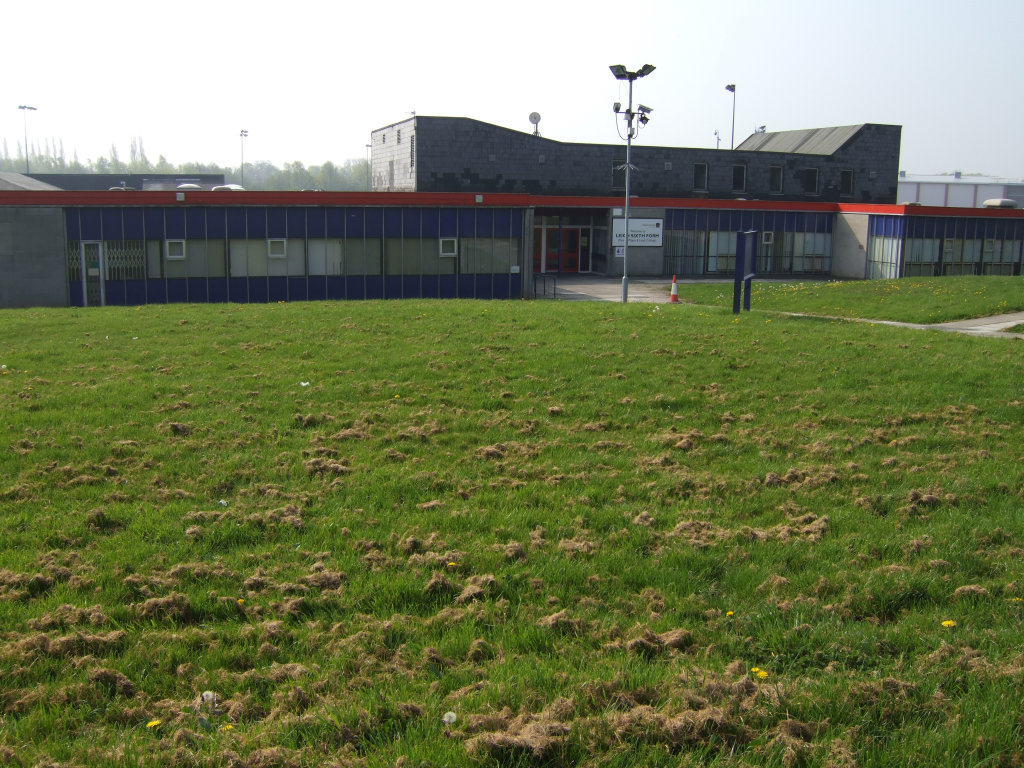
Leigh College, Marshall Street, Leigh, Lancs
Building below demolished 2007 and now rebuilt at the Leigh Sports Village – 1, 2, 3, 4 article by Julie McKiernan courtesy of PastForward, produced by Wigan Archives & Museums, Issue No. 97, August – November 2024, Marking 50 years of the borough, Wigan and Leigh’s local history magazine – Address: Past Forward, Archives, Wigan & Leigh, Leigh Town Hall, Mark Street, Leigh, WN7 1DY

 PROject Templates