

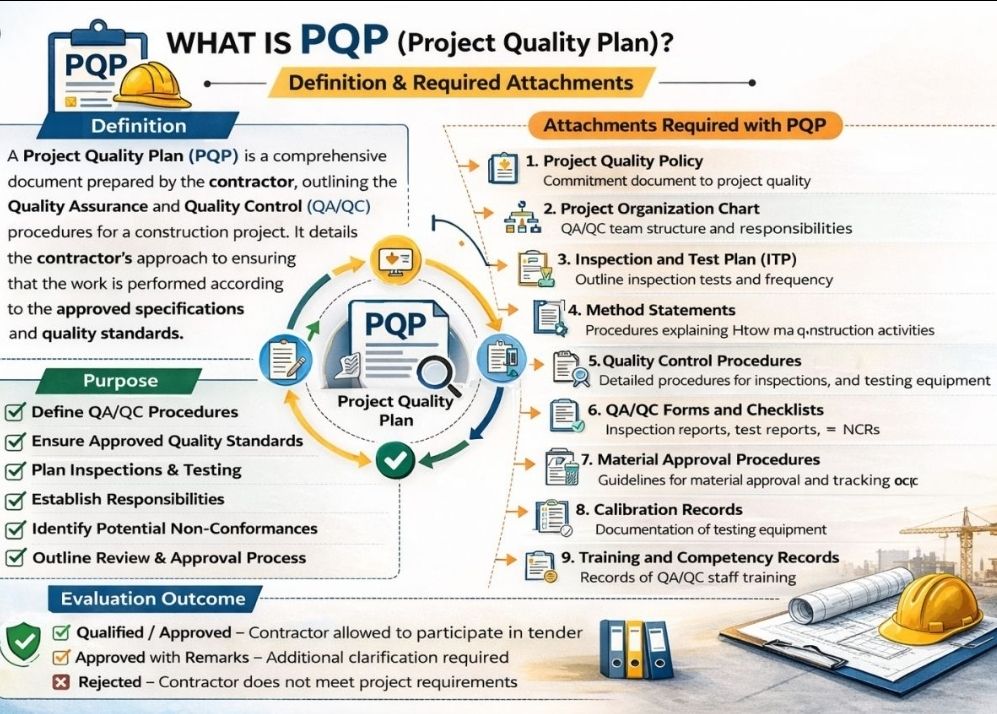
The primary purpose of a Project Quality Plan (PQP) is to define the standards, tools, and processes required to ensure a project’s deliverables are “fit for purpose” and meet all stakeholder expectations. It serves as a strategic roadmap for the project team to maintain consistent quality throughout the project lifecycle rather than treating it as an afterthought.
Core Objectives
A PQP is designed to achieve several critical goals:
- Define “Quality”: Translates vague stakeholder needs into measurable criteria and specific benchmarks.
- Prevent Defects: Establishes Quality Assurance (QA) processes to proactively “build in” quality from the start, reducing the risk of errors.
- Detect and Correct Issues: Outlines Quality Control (QC) activities, such as testing and inspections, to identify and fix defects before they reach the customer.
- Clarify Accountability: Assigns specific roles and responsibilities so every team member knows who is responsible for performing, checking, and approving work.
- Ensure Compliance: Guarantees the project adheres to relevant internal policies, legal regulations, and industry standards like ISO 9001.
Strategic Benefits
Implementing a structured quality plan provides tangible advantages for project management:
- Reduced Costs and Rework: By catching errors early, the team avoids expensive last-minute fixes and wasted resources.
- Improved Efficiency: Standardised workflows and clear metrics allow the team to focus on production rather than constant troubleshooting.
- Increased Stakeholder Trust: Providing objective evidence through audits and reports gives sponsors and clients confidence in the final outcome.
- Continuous Improvement: The plan often includes feedback loops and lessons-learned processes to refine and enhance quality for future project phases.
Project Quality Plan PQP in QA/QC Overview
 PROject Templates