

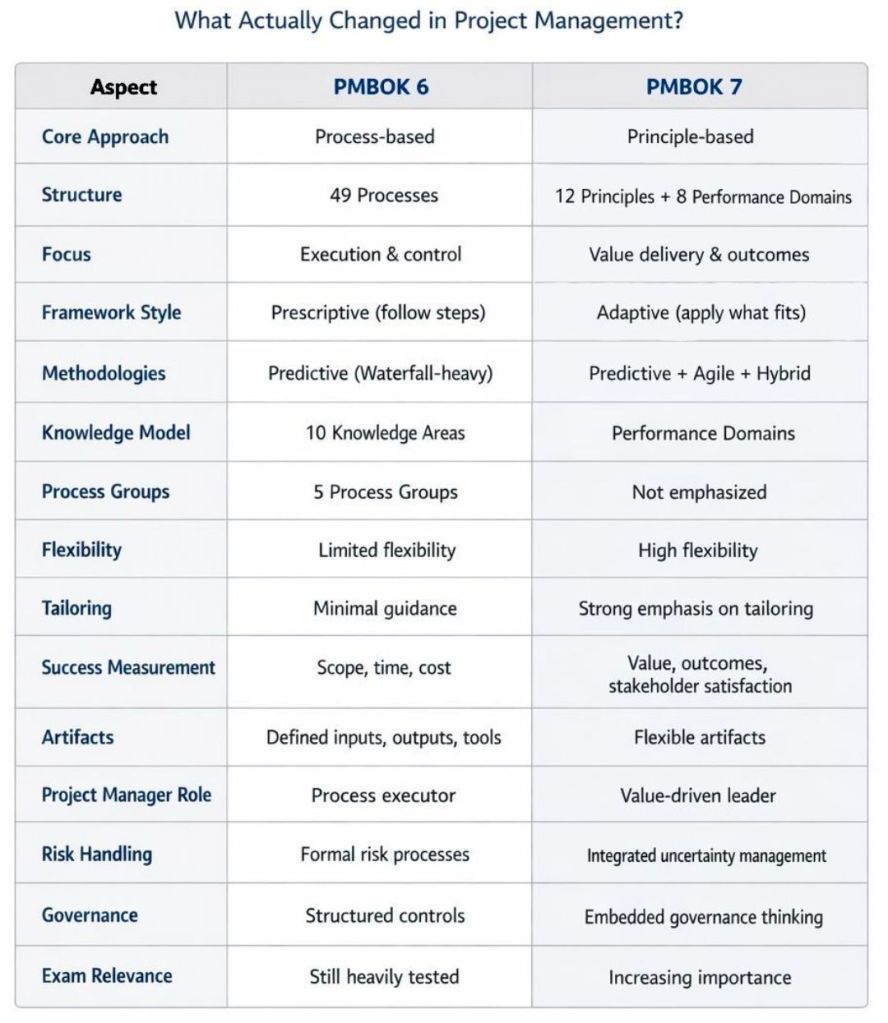
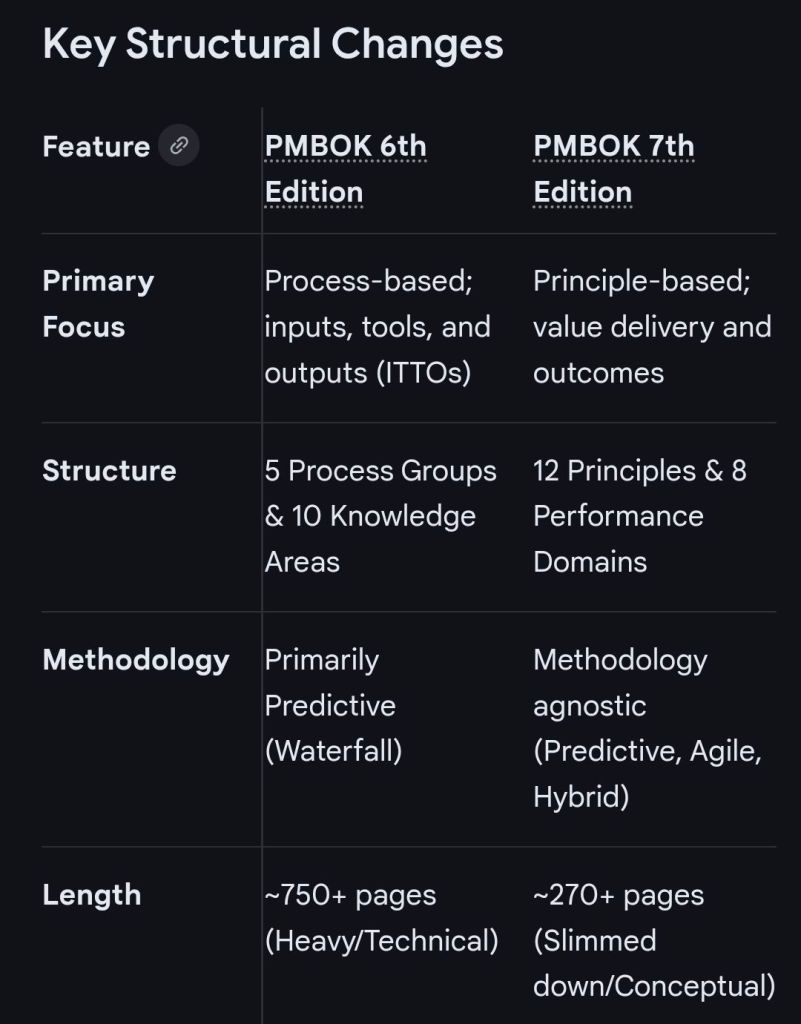
The transition from the PMBOK Guide 6th Edition to the 7th Edition represents a fundamental shift from a prescriptive, process-oriented framework to a flexible, principles-based one. While the 6th Edition focused on “how” to manage projects through specific steps, the 7th Edition focuses on “why” and “what” outcomes are being achieved.
Major Insights into the Changes
- From Processes to Principles: PMBOK 7 replaces the 49 prescriptive processes with 12 Project Management Principles (e.g., Stewardship, Team, Stakeholders, Value, Tailoring) that serve as foundational guidelines for behavior and decision-making in any environment.
- Performance Domains: The 10 Knowledge Areas are replaced by 8 Performance Domains (Stakeholders, Team, Development Approach, Planning, Project Work, Delivery, Measurement, and Uncertainty). These domains focus on critical activity groups for delivering outcomes rather than step-by-step tasks.
- Value Delivery System: The 7th Edition introduces a “system for value delivery,” shifting focus from just managing project deliverables to how projects contribute to an organization’s overall strategy and business goals.
- Tailoring: While always part of project management, tailoring is now a core principle and has its own dedicated chapter in PMBOK 7. It encourages project managers to adapt their approach based on the specific project context, complexity, and organizational needs.
- Agile and Hybrid Integration: PMBOK 7 fully integrates agile and hybrid practices into the core text, whereas PMBOK 6 largely treated them as an appendix or a separate guide.
- Models, Methods, and Artifacts: The rigid ITTO structure of PMBOK 6 is replaced by a broader section on Models, Methods, and Artifacts. This provides a high-level grouping of tools without prescribing exactly when or how they must be used.
PMP Exam Context
PMBOK 7 does not make PMBOK 6 obsolete. For the Project Management Professional (PMP) exam, both editions remain relevant reference materials. PMBOK 6 provides the technical workflow “checklist,” while PMBOK 7 provides the “mindset” and measurement strategies for modern, complex projects.

 PROject Templates