

In the PRINCE2 project management methodology, Themes (renamed to Practices in the 7th edition released in 2023) are the seven functional areas of project management that must be addressed continuously throughout the project lifecycle. They provide a structured framework for managing key aspects like cost, risk, and quality to ensure the project remains on track.
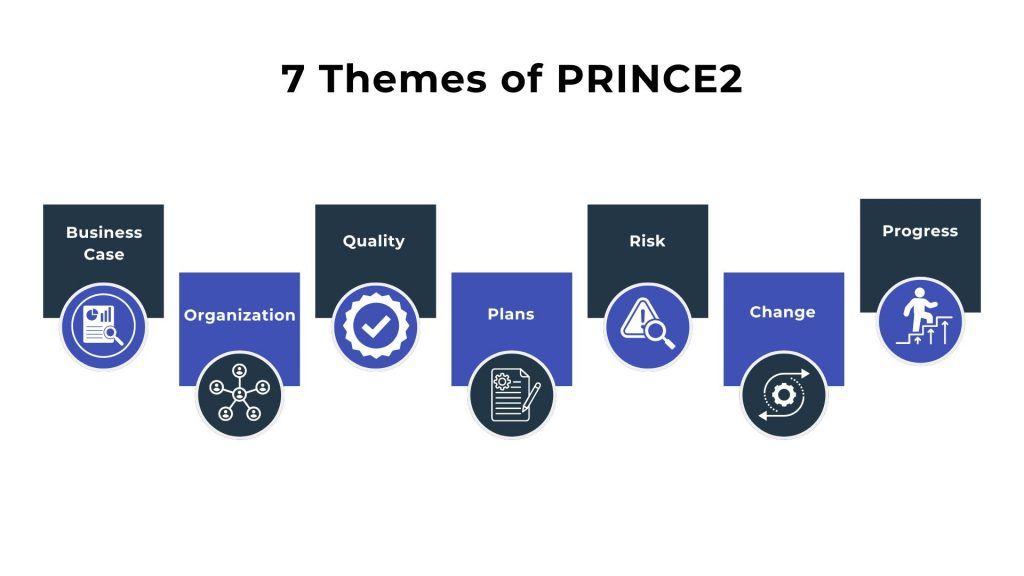
Overview of the Seven Themes (Practices)
- Business Case: Focuses on the “Why” of the project. It establishes the justification for the investment and ensures the project remains desirable, viable, and achievable.
- Organisation: Addresses the “Who” by defining the project’s structure of accountability and responsibilities. It identifies key stakeholders and establishes the project management team.
- Quality: Focuses on the “What” by defining the user’s requirements and quality standards. It ensures that deliverables are fit for purpose and meet stakeholder expectations.
- Plans: Describes the “How,” “How Much,” and “When”. This theme provides techniques for creating project, stage, and team plans to facilitate communication and control.
- Risk: Manages the “What If” by identifying, assessing, and controlling uncertainties that could impact the project’s objectives, whether they are threats or opportunities.
- Change (Issues): Deals with the impact of changes and unexpected events. It provides a formal process for capturing, assessing, and controlling requests for change to project baselines.
- Progress: Evaluates “Where are we now?” versus “Where are we going?”. It establishes mechanisms to monitor actual achievements against planned outcomes and manage deviations through tolerances.
Key Concepts and Terminology
- Continuous Application: Unlike processes, which follow a sequence, themes are applied simultaneously throughout the project.
- Tolerances: Each theme uses tolerances (allowable deviations for time, cost, quality, etc.) to support the principle of Manage by Exception.
- PRINCE2 7 Updates: The latest edition introduces Sustainability as a 7th performance target and emphasizes People as a core element alongside Principles, Practices, and Processes.

 PROject Templates