

Henry Gantt (1861–1919) was an American mechanical engineer and management consultant who revolutionized project management by introducing visual tools to track work against time. A close associate of Frederick Taylor, he humanized “scientific management” by focusing on employee motivation and social responsibility alongside industrial efficiency.
Overview of Henry Gantt’s Contributions
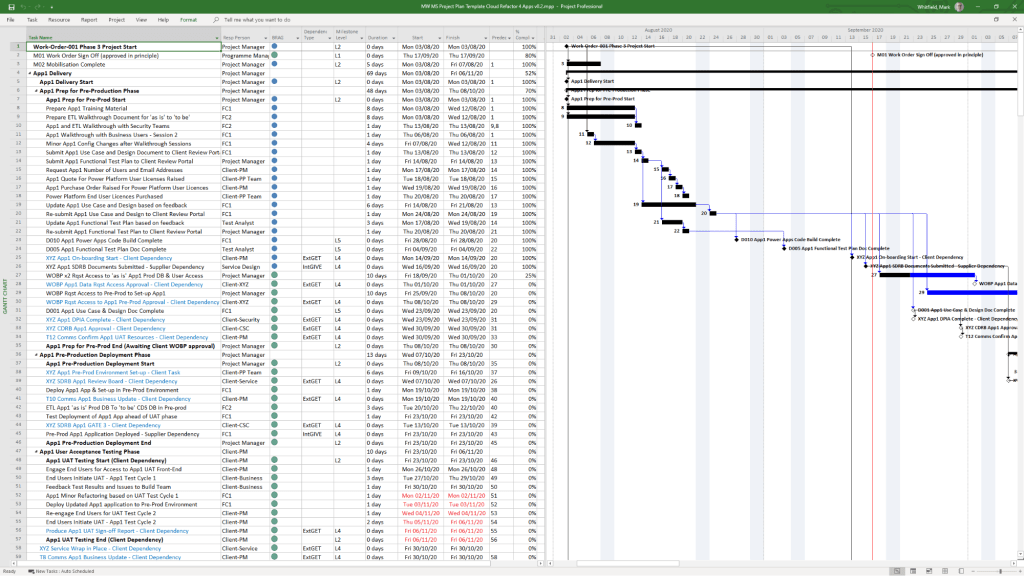
- The Gantt Chart: His most famous invention, a horizontal bar chart that illustrates a project schedule, including task durations and progress.
- Task and Bonus System: A wage system that guaranteed a base rate but offered bonuses to workers who exceeded daily production goals.
- Social Responsibility: He argued that businesses have a moral obligation to the welfare of the society in which they operate, not just to their owners.
- Industrial Efficiency: He advocated for using scientific analysis to eliminate “chance and accidents” in manufacturing.
Comprehensive Gantt Timeline History
Era 1: Pre-Gantt & Early Origins (1765–1896)
- 1765: Joseph Priestley creates early timeline charts, which some consider the conceptual distant ancestors of the Gantt chart.
- 1896: Polish engineer Karol Adamiecki develops the “Harmonogram,” a precursor that displayed interdependent processes. However, he published it only in Polish and Russian, limiting its global recognition.
Era 2: The Henry Gantt Era (1903–1919)
- 1903: Henry Gantt develops his first version of a production chart for the American Locomotive Company.
- 1910–1915: Gantt refines and popularizes his chart through articles and his book Work, Wages and Profits (1910).
- 1917–1918: At the request of General William Crozier, Gantt charts are used to manage massive military production for the U.S. during World War I.
- 1919: Henry Gantt passes away.
Era 3: Global Adoption & Infrastructure (1920s–1970s)
- 1922: Wallace Clark, a colleague of Gantt, publishes The Gantt Chart: A Working Tool of Management, leading to international adoption.
- 1929: Walter Polakov introduces Gantt charts to the Soviet Union for their First Five Year Plan.
- 1931–1936: Gantt charts are used on massive infrastructure projects like the Hoover Dam and later the U.S. Interstate highway system.
- 1940s: Extensively used for logistics and military project management during World War II.
- 1950s: Become a staple in the construction and engineering industries; the first digital predecessors like PERT and Critical Path Method (CPM) emerge.
Era 4: The Digital Revolution (1980s–Present)
- 1980s: The advent of personal computers allows project managers to create and update charts without redrawing them by hand.
- 1990s: Software like Microsoft Project adds “link lines” to display complex dependencies between tasks.
- 2000s–2010s: Web-based and cloud-based applications (like Jira or Asana) integrate Gantt charts for real-time team collaboration.
- Present: Modern tools use AI to automate chart maintenance and predict risks based on historical data.
Gantt Chart Detailed Timeline History by Era and Year

 PROject Templates