

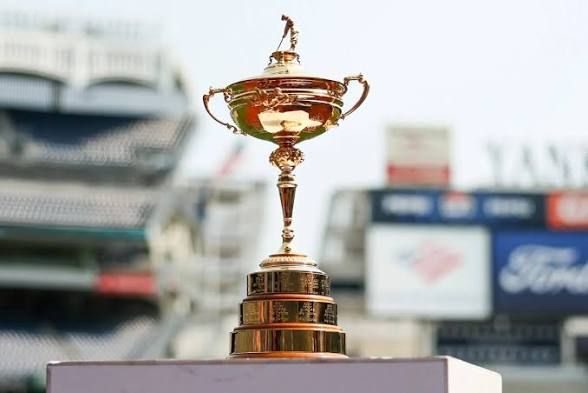
The Ryder Cup is a prestigious biennial men’s golf competition pitting a team of professionals from the United States against a team from Europe. Founded in 1927 by English businessman Samuel Ryder, the event is renowned for its intense match-play format, team camaraderie, and the absence of prize money, focusing purely on pride and nationality.
Detailed Historical Timeline by Era
1. The Origin & Early Years (1921-1937)
- 1921: Unofficial match played at Gleneagles, Scotland, won by Great Britain.
- 1926: An unofficial match at Wentworth saw a British victory, leading Samuel Ryder to donate the trophy.
- 1927: 1st Official Ryder Cup. USA wins 9½–2½ in Worcester, MA.
- 1929: Great Britain records its first victory at Moortown, England.
- 1933: Great Britain defeats the US by a narrow margin, 6½–5½.
- 1935-1937: The United States initiates its dominance, winning the next two contests comfortably.
2. The Post-War Era & US Dominance (1947-1977)
Following a pause during World War II, the USA solidified its dominance with superior putting and depth, winning 18 of the first 22 matches.
- 1947: Play resumes with a dominant US win in Portland, Oregon.
- 1957: Great Britain wins at Lindrick, England, providing a brief respite from US dominance.
- 1961: Matches reduced from 36-hole to 18-hole contests.
- 1963: The format expands to three days and introduces fourball matches.
- 1969: Famously, Jack Nicklaus conceded a 4-foot putt to Tony Jacklin, resulting in the first-ever tie (16–16).
- 1973: The British team expands to include players from Ireland.
3. The Birth of Team Europe (1979-1999)
To address the lack of competitiveness, the GB & Ireland team was expanded to include all of continental Europe, transforming the tournament into a truly competitive rivalry.
- 1979: First official “Team Europe” competes.
- 1985: Europe breaks the streak. Led by Tony Jacklin, Europe wins on US soil for the first time in decades at The Belfry.
- 1987: Europe wins again, retaining the cup on American soil at Muirfield Village.
- 1989: The matches end in a 14–14 tie, with Europe retaining the cup.
- 1991: “War on the Shore.” A highly controversial and intense US win in Kiawah Island, South Carolina.
- 1997: The Ryder Cup is held in continental Europe for the first time (Valderrama, Spain), with Seve Ballesteros as captain.
- 1999: “Battle of Brookline.” USA overcomes a large final-day deficit to win, leading to controversial celebrations.
4. The Modern Era & European Dominance (2002-Present)
Since 2000, Europe has won the majority of matches, creating a new period of intense competition.
- 2001/2002: The 2001 event was postponed to 2002 due to 9/11, shifting the tournament to even-numbered years (until 2021).
- 2004: Europe records its biggest ever win at Oakland Hills (18½–9½).
- 2010: Europe regains the cup in Wales after a tense Monday finish.
- 2012: “The Miracle at Medinah.” Europe stages the greatest comeback in history, trailing 10-6 before winning 14½-13½.
- 2014: Paul McGinley leads Europe to a third consecutive victory at Gleneagles, Scotland.
- 2018: Team Europe dominance in France, highlighted by the “Moliwood” pairing (Fleetwood/Molinari).
- 2021: USA dominates a young European team 19-9, the largest margin of victory in modern history, at Whistling Straits.
- 2023: Europe regains the cup in Italy, ensuring their home soil winning streak continues.
Key Ryder Cup Facts
- Recent Winner: Europe (2023)
- Most Points: Sergio Garcia (Europe) – 25.5 points
- Format: Three-day event consisting of Foursomes, Fourballs, and Singles matches.
- Venue Rotation: Alternates between European and American soil every two years.
The Ryder Cup Golf Competition

 PROject Templates